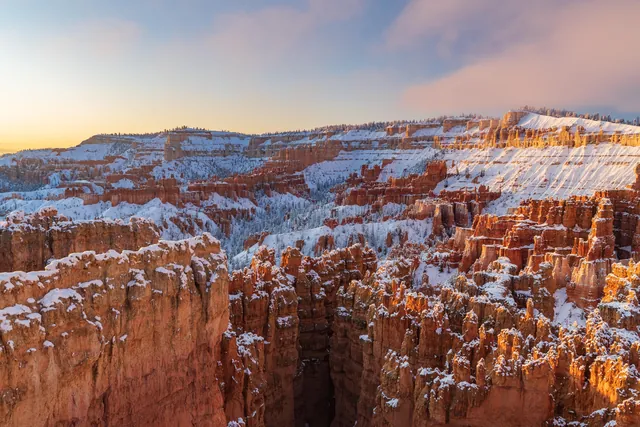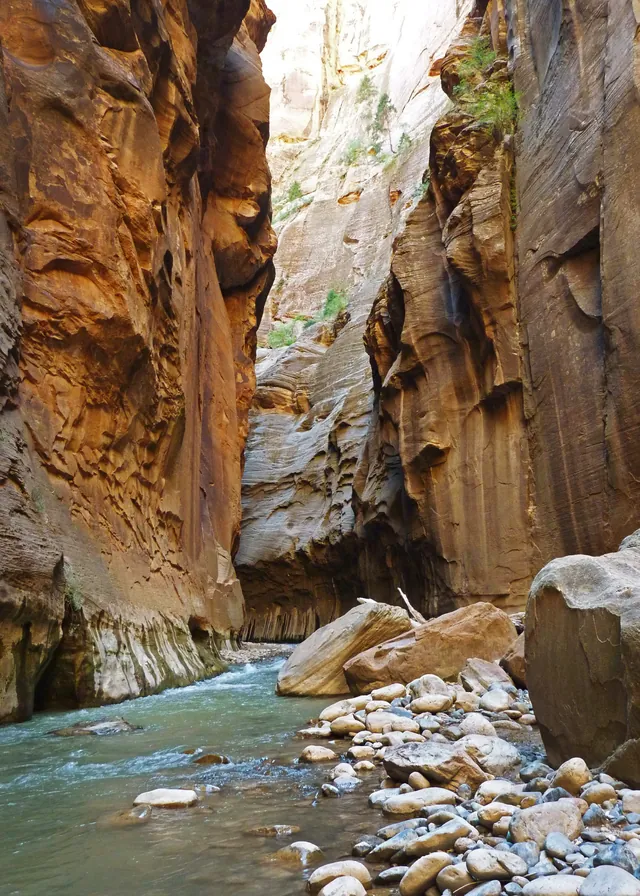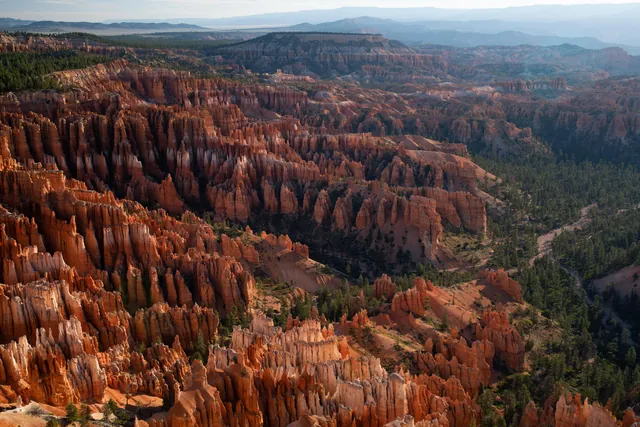

To get from Zion to Bryce Canyon, drive east through Zion National Park on UT-9, then take US-89 north, UT-12 east, and UT-63 south straight into Bryce Canyon National Park. For vehicles too large for that mountain highway, NPS describes the Highway 20 route as roughly 150 miles and 2.5 hours. Public transportation to Bryce Canyon National Park is not available, so bringing your own vehicle gives you total freedom to explore.
The Zion to Bryce Canyon Route
The direct drive from Zion to Bryce Canyon follows UT-9 east through Zion National Park, then US-89 north, UT-12 east, and UT-63 south into the park. The National Park Service gives this as its route to Bryce Canyon when traveling from the south through Zion. Your journey leads directly to the Bryce Canyon Visitor Center, located 1 mile inside the park boundary.
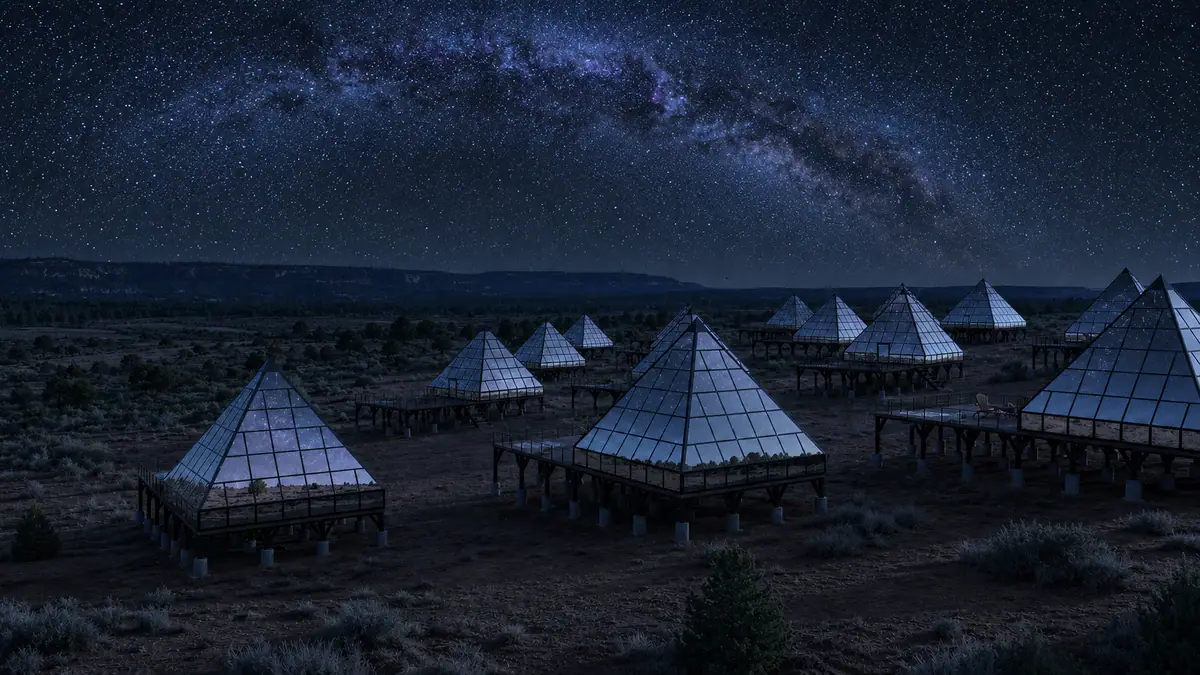
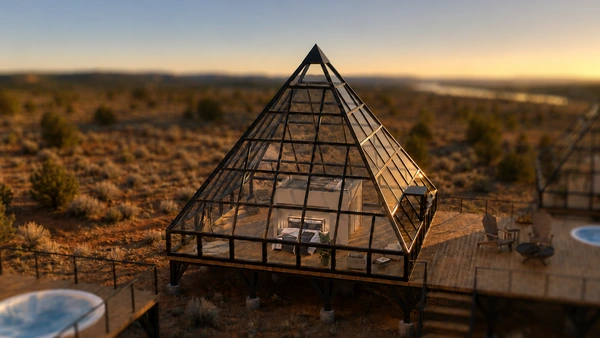
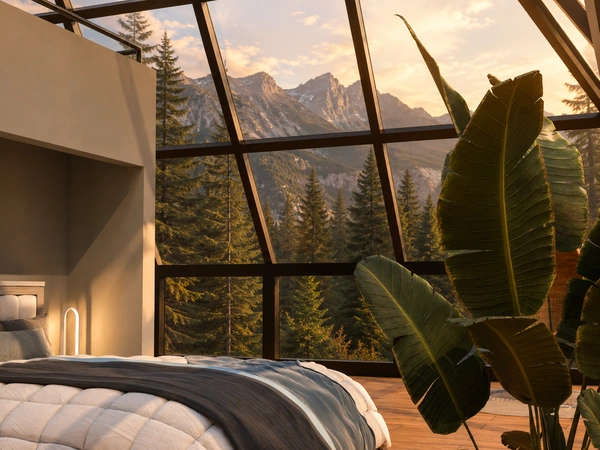
Spend the Night Under the Sky near Bryce Canyon
Get early access to our pyramids near Bryce Canyon and Glacier, with priority booking to all locations.
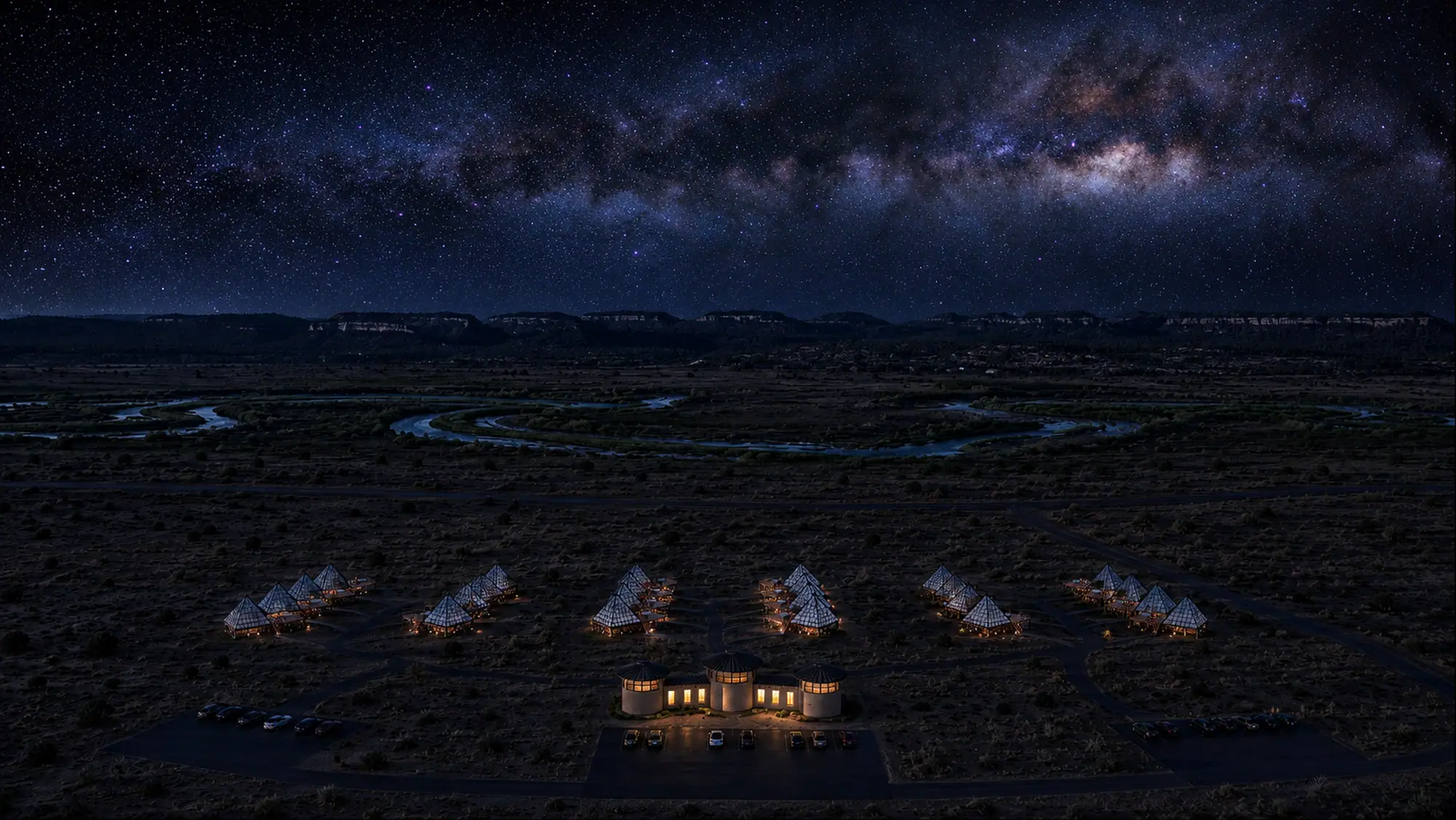
Concept renderings
NPS describes the Highway 20 detour as roughly 150 miles and 2.5 hours, making it 63 miles and about 42 minutes longer than traveling the Zion-Mt. Carmel Highway route.
Traffic along the Zion-Mt. Carmel Highway usually moves at under 30 miles per hour, while the open state highways on the Highway 20 route move much faster. Vehicles exceeding the park size limits cannot drive the stretch between Canyon Junction and the East Entrance, so they take the Highway 20 route described below.
Turn-by-Turn Directions on UT-9, US-89, UT-12 and UT-63
The direct route from Zion to Bryce Canyon links four highways, with three straightforward turns after UT-9 leads you out of the park. The step-by-step directions below begin at the Interstate 15 (I-15) exit for UT-9.
- Take I-15 exit 16 and follow UT-9 east into Zion National Park. If you are already starting inside Zion Canyon, pick up UT-9 heading east.
- Stay on UT-9 east past Canyon Junction. From that junction to the East Entrance, the drive follows the Zion-Mt. Carmel Highway, so plan for speeds under 30 miles per hour.
- Leave Zion at the East Entrance. Mt. Carmel Junction lies 13 miles farther east along UT-9.
- Turn north on US-89.
- Turn east on UT-12.
- Turn south on UT-63 and head straight into Bryce Canyon National Park. The visitor center welcomes you 1 mile past the park boundary.
Both parks require entry fees. Zion asks for the standard park fee or an active pass, and entering Bryce Canyon in a private vehicle costs $35 at the entrance station, with free admission for pass holders. Your Bryce Canyon vehicle pass covers every passenger in your car for the park shuttle as well. If you intend to explore both parks, look into an America the Beautiful pass before your departure.
The Highway 20 Alternative North of Cedar City
Highway 20, situated north of Cedar City, provides the designated route to Bryce Canyon for any vehicles too large for the Zion-Mt. Carmel Highway. The detour adds about 42 minutes compared to the drive through Zion, with its 63 additional miles cruising along faster state highways.
Oversized vehicles reroute through Springdale back out the South Entrance. From that point, the drive travels north and then heads east:
- From I-15, take exit 95 for UT-20.
- Drive east along UT-20 until reaching US-89.
- Turn south on US-89, then head east on UT-12.
- Turn south onto UT-63 into Bryce Canyon National Park.
You can review the official vehicle dimension limits on the large-vehicle page linked from Zion's directions and transportation page, making it simple to check your rig before deciding on a route.
A third route departs I-15 at exit 59. Drive east on 200 North, head south on Main Street to Center Street, and continue east on UT-14 to US-89. From there, follow US-89 north, UT-12 east and UT-63 south, a drive Bryce Canyon describes as very scenic in summer and early fall.
Bus and Shuttle Options from Zion to Bryce Canyon
Public transportation to Bryce Canyon is not available. Any public transit services in the region remain exclusively on the Zion side of the drive.
SunTran, the bus service based in St. George, runs a Zion Route connecting St. George, Washington, Hurricane, La Verkin, Virgin, and Springdale. In addition, free shuttles move visitors through Zion Canyon and Springdale during the shuttle season. None of these transit lines extend outward to Bryce Canyon.
Once you arrive at Bryce Canyon, the free park shuttle begins its loop at the Shuttle Station in Bryce Canyon City north of the park entrance, ready to serve you after you drive in. Note that the three-hour Rainbow Bus Tour is not offered, while commercial tour buses are permitted at the same viewpoints served by the shuttle.
Airports for a Zion and Bryce Canyon Trip
Harry Reid International Airport (LAS) in Las Vegas is the closer major hub for an itinerary covering both parks, and Cedar City Regional Airport (CDC) is the closest airport to Bryce Canyon. Bryce Canyon sits at roughly the same distance from Las Vegas as it does from Salt Lake City International Airport (SLC), meaning the real mileage difference appears at the Zion side. Las Vegas is 170 miles from Zion, while Salt Lake City is 300 miles away.
| Airport | Type | Miles to Zion | Miles to Bryce Canyon |
|---|---|---|---|
| Harry Reid International (LAS), Las Vegas | Major | 170 | About 270 |
| Salt Lake City International (SLC) | Major | 300 | About 270 |
| St. George Regional (SGU) | Regional | 49 | 125 |
| Cedar City Regional (CDC) | Regional | 60 | 80 |
St. George Regional Airport (SGU) sits 49 miles from Zion and 125 miles from Bryce Canyon, offering flight connections through Salt Lake City and Denver. Cedar City Regional Airport places you just 60 miles from Zion and 80 miles from Bryce Canyon, with convenient flights from Salt Lake City.
Fly into St. George if you want a Denver connection and plan to start your journey at Zion. Book your arrival into Cedar City if you desire the shortest drive on the Bryce Canyon end, or choose Las Vegas if you prefer traveling through a major airport. If you land in Las Vegas, plan the full drive from Las Vegas to Bryce Canyon before you pick up the car.
Shuttle and Park Hours at Bryce Canyon
Bryce Canyon National Park stays open year-round, and its convenient free shuttle operates from April through mid-October. Park roads are plowed and sanded following heavy snowfalls, although brief closures can occur during and right after winter storms. Because the visitor center rests at an elevation of 7,894 feet, check the Bryce Canyon weather guide before setting out on a winter drive from Zion.
Taking the shuttle is optional but recommended, and it comes at no extra cost beyond standard park admission. The 2026 schedule ran from April 3 through October 18.
- Shuttle Station (Stop 1) in Bryce Canyon City: provides free all-day parking, park passes available for purchase, and shorter boarding lines. Located just north of the park, it allows you to park smoothly before reaching the main entrance.
- Visitor Center (Stop 6): park across the street in the Additional Parking Lot, as parking at the visitor center lot carries a one-hour limit.
- Frequency: buses typically arrive every 15 minutes, with the complete loop taking about 50 minutes without stops.
The shuttle loop brings you straight to Bryce, Inspiration, Sunset, and Sunrise Points. Vehicles measuring 23 feet or longer cannot park at these rim viewpoints during active shuttle hours, and pets are not permitted on the buses.
Nights to Plan at Bryce Canyon
Plan at least one night near Bryce Canyon after the drive from Zion. A same-day round trip from Zion Canyon means driving the entire route twice. Staying overnight lets you plan around the shuttle, which operates April through mid-October, and leaves your evening open for the night sky.
Using the shuttle lets you spend a full day exploring the Rim Trail between the four signature viewpoints. The walk from Bryce Point to Inspiration Point measures 1.5 miles, Inspiration to Sunset Point is 0.7 miles, and Sunset to Sunrise Point offers a flat, paved 0.5 miles. While the Bryce Point section closes during winter, Sunset Point provides direct access to begin the Navajo Loop Trail.
A day trip works if you only want the viewpoints on the shuttle loop and your car fits the Zion-Mt. Carmel Highway. If your vehicle has to take Highway 20, the detour adds time in both directions. Two nights give you one full rim day with an evening on either side of it.
For a direct side-by-side comparison of what each landscape offers, explore the guide to Bryce Canyon vs Zion.
For a six-night plan that continues to Capitol Reef, see the Bryce Canyon itinerary with Zion and Capitol Reef.
Staying Near Bryce Canyon for the Night Sky
Staying close to Bryce Canyon minimizes your morning drive to the shuttle and preserves your entire evening for stargazing. Several hotels and both campgrounds located on the shuttle route feature their own stops, allowing guests to board easily without ever moving their vehicle. The guide to where to stay near Bryce Canyon walks you through all the available options.
At Dark Light Collection, we are building glass pyramids on private land about 15 minutes from Bryce Canyon National Park, with Red Canyon about 10 minutes away. We designed each pyramid with a king bed positioned for immersive sky-gazing, a private deck with a fire pit, and your own personal deck telescope. The Bryce Canyon pyramids open in 2027, and founding deposits are open now on the reservation page, so you can be among the first to stay and lock in founding pricing.
Before departing Zion, enter the Bryce Canyon address (UT-63, Bryce, Utah 84764) into your navigation app so your route is mapped and ready.
When you spend the night near the park, the quiet hours after the final shuttle runs belong entirely to you and the cosmos. The Bryce Canyon stargazing guide explains exactly where and when to look.
Frequently asked questions
How far is Bryce Canyon from Zion?
According to NPS, the direct drive through Zion on UT-9, US-89 and UT-12 is 63 miles and about 42 minutes shorter than the Highway 20 route. The Highway 20 route, used by vehicles too large for the Zion-Mt. Carmel Highway, is roughly 150 miles and 2.5 hours.
Can you take a bus from Zion to Bryce Canyon?
No. Public transportation to Bryce Canyon is not available, as the bus and shuttle networks around Zion exclusively serve Zion Canyon and its surrounding towns.
What is the closest airport to Bryce Canyon?
Cedar City Regional Airport (CDC) is the closest option, located about 80 miles from Bryce Canyon with scheduled flights from Salt Lake City. The nearest major airports, located in Las Vegas and Salt Lake City, are each approximately 270 miles from the park.
Can you see Zion and Bryce in one trip?
Yes. UT-9 runs east through Zion and connects to US-89, UT-12 and UT-63, which lead into Bryce Canyon, so one road trip covers both parks. Plan at least one night near Bryce so you have time for the rim and the night sky.
Spend the Night Under the Sky near Bryce Canyon
Get early access to our pyramids near Bryce Canyon and Glacier, with priority booking to all locations.
Reserve Your Pyramid Stay near Bryce Canyon →