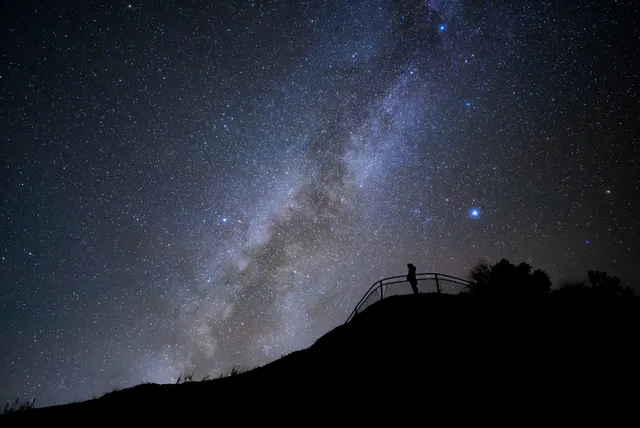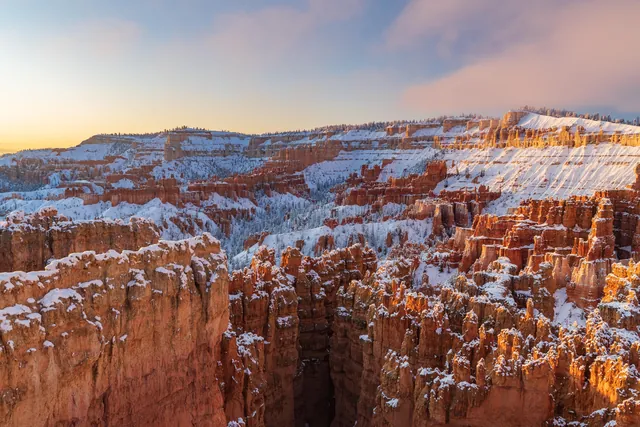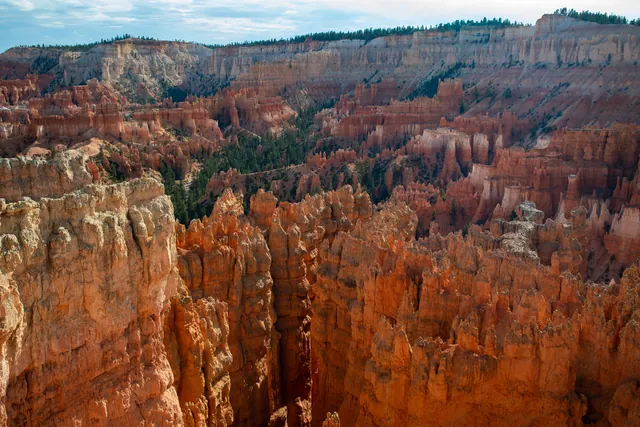

Bryce Canyon stargazing works best on a clear night close to the new moon, when thousands of stars and the band of the Milky Way stretch across the sky. The park is open 24 hours a day, so you can watch from a paved viewpoint on your own or join a ranger program. Pack warm layers, because from October to May temperatures fall below freezing nearly every night.
Dark Skies Over Bryce Canyon
Bryce Canyon was certified as an International Dark Sky Park in 2019, at the Gold Tier. The National Park Service credits the park's high elevation, clean air and remote location for some of the darkest skies in the country, and almost the entire park works for stargazing.
A good night here comes down to five decisions:
- Pick dates near the new moon. The moon sets with the sun and stops competing with the stars for brightness.
- Wait for a clear night. Under a clear, moonless sky you can see thousands of stars and the band of the Milky Way across the sky.
- Choose a paved viewpoint. Sunrise Point, Inspiration Point and Whiteman Bench are all paved and accessible.
- Add a ranger program if one runs during your stay. Options include telescope programs, ranger evening talks (topics vary), full moon hikes and the annual June Astronomy Festival.
- Dress for cold and bring a red light. White light hurts night vision and is banned on the full moon hike and at festival telescope viewing.
The park never closes, so a viewpoint at midnight or at 4 a.m. is open to you.
Best Time for Bryce Canyon Stargazing
The best time for Bryce Canyon stargazing is a clear night close to the new moon, and June is one of the best months of the year. A full moon competes with the stars, so plan around it unless the moonlit full moon hike is the reason for your trip.
Moon Phase
In the days around a full moon, the canyon sits under bright moonlight and the ranger full moon hikes run. Pick one goal per trip: a sky packed with stars, or the hoodoos by moonlight.
Season
June pairs the Milky Way's brightest stretch with the annual Astronomy Festival. The galactic center, the most vivid part of the Milky Way, is up not long after sunset from June through August.
Winter brings a rarer sight. Winter visitors can see the outer bands of the Milky Way, which are much dimmer, and very few people have ever stood anywhere dark enough to see them. Use a planetarium app to preview what will be overhead on your dates and at each hour of the night.
Ranger Astronomy Programs and Full Moon Hikes
Ranger programs at Bryce Canyon change with the season, so build your plan around the schedule for your dates. Ranger-led telescope programs may run depending on the time of year and the day of the week. Daily times and locations are on the park calendar at nps.gov/brca, and the Visitor Center posts the schedule of topics.
Evening programs, typically offered from Memorial Day through Labor Day, last 45 to 60 minutes. The ranger chooses the topic each night. These talks are seated and accessible.
Full Moon Hikes
Full moon hikes are typically offered year-round at sunset, as weather permits. Hikes are typically 1 to 2 miles and last 60 to 120 minutes. The ranger picks the route, which can be an easy walk along the rim or a steep, rocky descent into the canyon.
The booking method varies. The park has used online reservations, with tickets for each month's hike released in two phases 14 and 5 days ahead, and it has also used a same-day 4 p.m. lottery in the Visitor Center theater. Confirm the current method on the Bryce Canyon website before you build a night around it.
Every participant agrees to these rules:
- Children 7 and younger cannot join.
- Hiking boots or hiking shoes with lug soles, in good condition, are required.
- White-light flashlights and headlamps stay off during the hike. Red lights are allowed.
- Flash photography is allowed only under set restrictions.
- Bring drinking water and a jacket.
Hikes are canceled for cloudy skies or temperatures below 10°F (-12°C). The steep trails also mean the hike is not wheelchair accessible. If your group includes a young child or a wheelchair user, plan on the paved viewpoints instead.
The Bryce Canyon Astronomy Festival
The 2026 Bryce Canyon Astronomy Festival was held June 11 to 13, 2026, and was free with park admission. It mixes family-friendly daytime activities with evening talks, telescope viewing and constellation tours. Dates for the next festival are not announced yet, so check the Astronomy Festival page for the next schedule.
The 2026 Festival Program
- Daytime, noon to 4 p.m.: solar telescopes (weather and staffing dependent) and a James Webb Space Telescope exhibit.
- Thursday evening talks: photographer Stan Honda on what national parks look like after dark, and storyteller Amy Sayle on reading the sky as a compass, clock and calendar.
- Friday evening talks: cultural astronomer Autumn Gillard on Southern Paiute astronomy, and Webb Project Scientist Macarena Garcia Marin on the Webb telescope's discoveries.
- Telescope viewing, 10 p.m. to midnight: volunteers aimed telescopes from the Overflow Parking lot across from the Visitor Center.
- Free astrophotography workshop, 9 p.m. to 12:30 a.m.: ran alongside the festival at the High Plateaus Institute and Bryce Amphitheater area.
2026 Tickets and Parking
Tickets for the 8:30 p.m. talks are handed out same day at the Visitor Center from 8 a.m. until they run out, with a limit of 6 per group. The outdoor talks at the North Campground Outdoor Theater need tickets only if weather moves them into the Visitor Center Theater. Sign up for the astrophotography workshop in advance, while nightly telescope viewing is open to everyone.
Parking at the Visitor Center is not allowed during telescope viewing. The telescope field lot is held for disabled visitors who cannot ride the shuttle. Park at the Shuttle Station in Bryce City, or board from your campground or lodging, and note that festival shuttles run until 12:15 a.m.
Bryce Canyon Stargazing Viewpoints
The recommended Bryce Canyon stargazing viewpoints are paved, flat and accessible.
- Sunrise Point: a short walk to a nearly 360-degree view, with relatively little light pollution from Tropic and Bryce Canyon City.
- Inspiration Point: very close to its parking lot, with 360-degree views from the higher viewpoints.
- Whiteman Bench Picnic Area: at mile 9.5 of the 18-mile park road, and one of the darkest places in the park by darkness readings.
- Yovimpa Point: a wide view to the south, with only distant light pollution from Page, Arizona.
- Sunset Point and Paria View: two more recommended spots along the rim.
Trails vary in accessibility, so stick to the viewpoints if anyone in your group uses a wheelchair.
Pets can come along on paved surfaces only, on a leash no longer than 6 feet. They cannot be left in a parked car while you hike.
Cold-Weather Gear for a Night Outside
Bryce Canyon nights are cold, and temperatures drop below freezing nearly every night for most of the year.
- Warm layers, a hat and gloves.
- A jacket you can zip over everything else.
- Drinking water.
- A red flashlight or headlamp.
- Hiking boots or shoes with lug soles if you plan to walk a trail in the dark.
- A blanket or camp chair for long sessions at a viewpoint.
Idling engines and generators are not permitted in park parking lots, so you cannot sit in a running car to warm up between looks. Inspiration Point helps here, because the viewpoint sits close to its lot. Month-by-month conditions are in the Bryce Canyon weather guide.
Photographing the Milky Way Over the Hoodoos
For Milky Way photos with hoodoos in the foreground, the Queen's Garden Trail and the Navajo Loop are the two recommended trails. Queen's Garden gives good views with hoodoos to the south, east and west. The Navajo Loop has tall rock fins and some hoodoos to the east and north.
Use a planetarium app to see where the Milky Way will sit on your date, then pick the trail whose hoodoos line up with it. Bring a tripod, wear lug-sole shoes, and light your way down with a red headlamp.
For hands-on teaching, the 2026 festival included a free astrophotography workshop, so check the next festival schedule for sign-up details.
Stargazing from a Glass Pyramid Near the Park
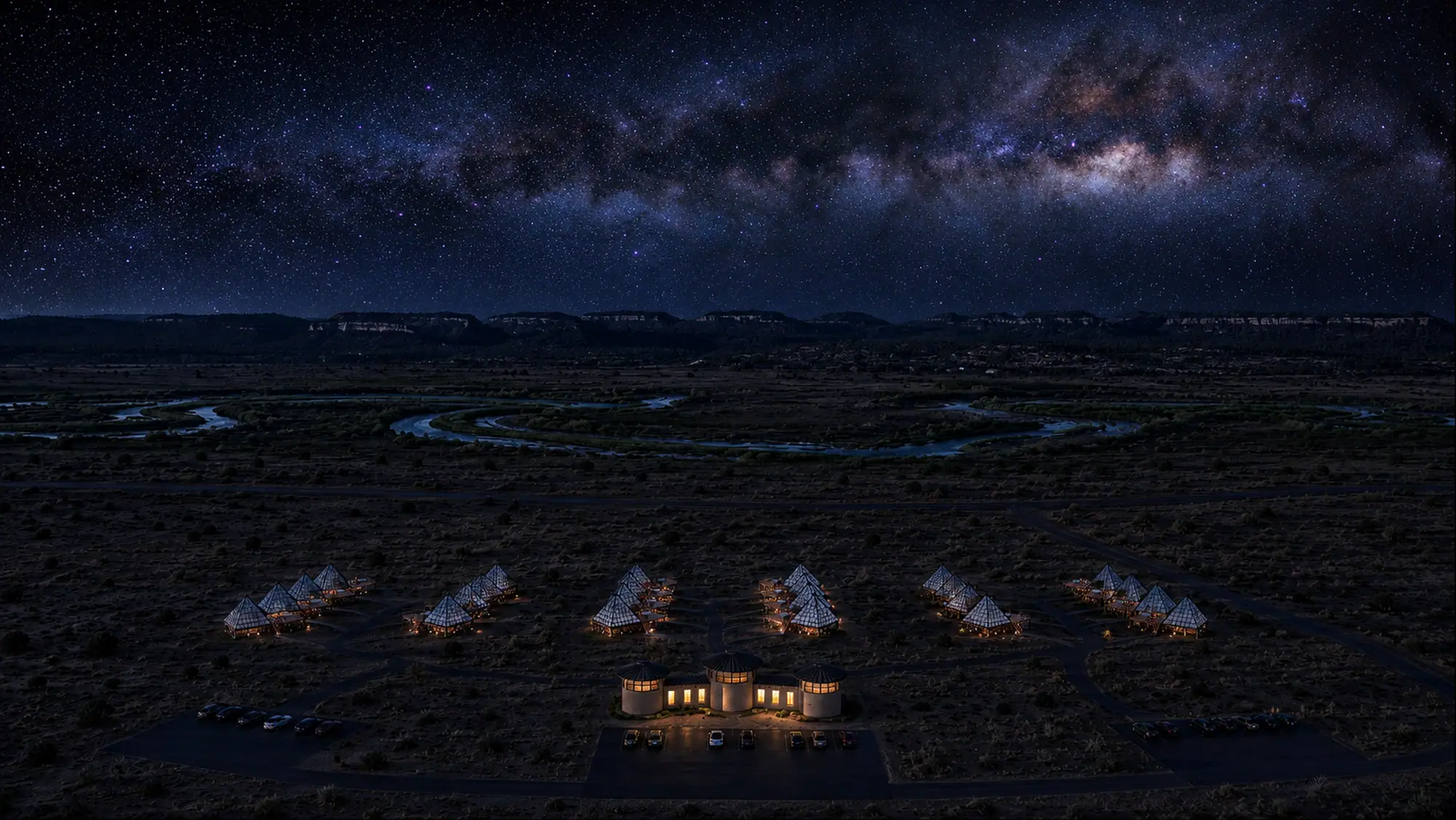
A glass pyramid near the park lets you keep watching the sky from bed after the cold sends you in from the rim. At Dark Light Collection, we are building glass pyramids on private land about 15 minutes from Bryce Canyon National Park, opening in 2027. Each pyramid is designed with a king bed positioned for sky-gazing, triple-pane glass heated for snow-melt, and a private deck with a fire pit, heated loungers and a personal telescope.
On cloudy nights a built-in projector turns the glass into a cinema. Nightly astrophotography, taken from the pyramid's own coordinates, is available to download. Founding deposits are open now on the Bryce location page, and the pyramid design page covers the 8 m and 9 m sizes.
For stargazing stays elsewhere in the country, see stargazing hotels in the USA.
Bryce Canyon is one of the certified parks in the guide to Dark Sky Parks in the US, where you can compare it with other places to see the Milky Way.
Frequently asked questions
Is Bryce Canyon a Dark Sky Park?
Yes. Bryce Canyon was certified as an International Dark Sky Park in 2019 at the Gold Tier.
When is the Bryce Canyon Astronomy Festival?
The 2026 festival was held June 11 to 13, 2026, and was free with park admission. Dates for the next festival are not announced yet, so check the Astronomy Festival page.
Can you see the Milky Way at Bryce Canyon?
Yes. On a clear night near the new moon you can see thousands of stars and the band of the Milky Way. Its brightest part, the galactic center, is up soon after sunset from June through August.
Watch the Bryce Sky from a Glass Pyramid
Founding deposits are open for glass pyramids about 15 minutes from Bryce Canyon National Park, opening in 2027.
Reserve Your Pyramid Stay near Bryce Canyon →