
To watch a meteor shower in Utah, choose a dark sky park near where you plan to sleep, then time your viewing for hours when the moon is below the horizon. Bryce Canyon National Park, Zion National Park, and neighboring southern Utah reserves provide dark desert skies away from major city lights. In our reading, cloud cover and moonlight matter more to a meteor night than which park you pick.
Utah Parks for Watching a Meteor Shower
Each park and monument in the table below provides dark skies, making the closest one to where you are staying a practical choice for a meteor night.
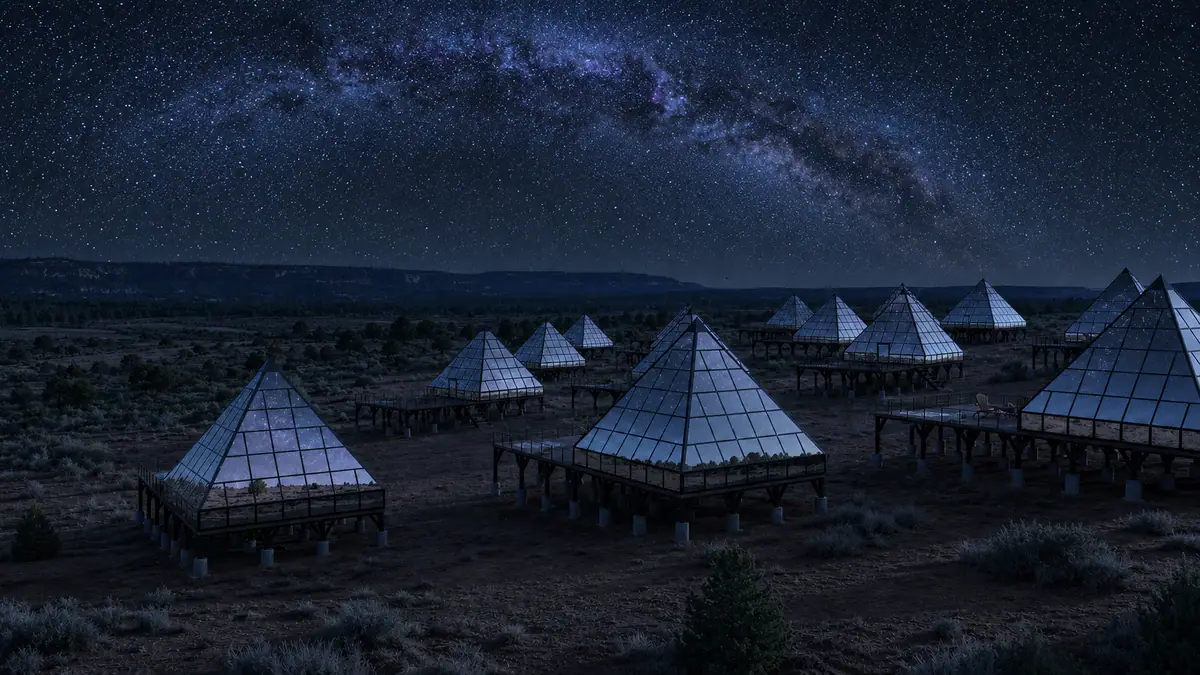
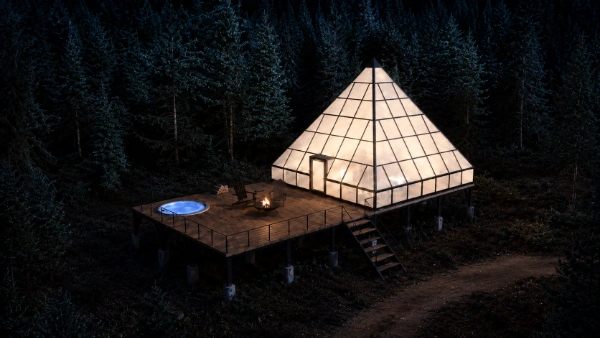
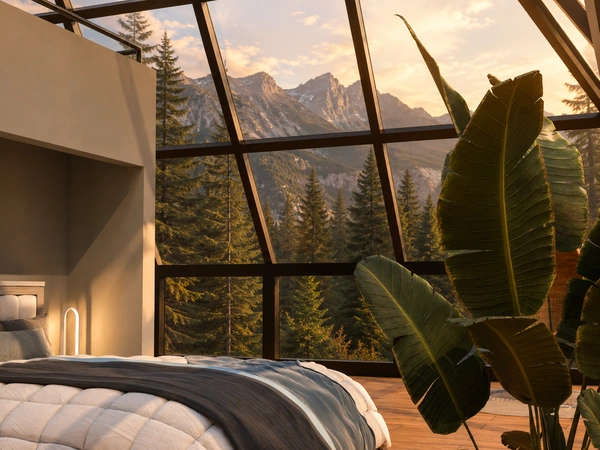
Reserve Your Utah Dark Sky Pyramid
Get early access to our pyramids near Bryce Canyon and Glacier, with priority booking to all locations.
Concept renderings
Moonlit and cloudy nights are the exception to that pick. If clouds roll over one plateau, switching to an alternate park can save your viewing window. Similarly, if your nearest park features narrow canyon walls, you will want an open overlook where rock formations do not block the sky.
To understand the protections behind these sites, you can explore what a Dark Sky Park is and how public lands preserve natural darkness. In our side-by-side reading of each park's published stargazing guidance, we assembled the primary viewing locations and dark-sky designations across the region.
| Park or Monument | Dark-Sky Status | Recommended Stargazing Locations | Best Use for a Meteor Night |
|---|---|---|---|
| Bryce Canyon National Park | Certified International Dark Sky Park in 2019 | Sunset Point, Sunrise Point, Inspiration Point, Paria View | High-rim overlooks offering expansive horizons and paved access |
| Zion National Park | International Dark Sky Park | East side, Kolob Terrace Road, Checkerboard Mesa pullout, Lava Point Overlook, Timber Creek parking lot | Wide views of the sky and flat ground at three named sites |
| Capitol Reef National Park | Designated an International Dark Sky Park in 2015 | Park-wide stargazing locations and annual Heritage Starfest | Near-pristine night skies, per the park |
| Arches National Park | Certified International Dark Sky Park in 2019 | Balanced Rock Picnic Area, The Windows Section, Garden of Eden Viewpoint, Panorama Point | Open areas off the main park road, darker the farther north you drive from Moab |
| Canyonlands National Park | Colorado Plateau Dark Sky Cooperative member | High viewpoints and open areas away from roads and buildings | A high viewpoint or wide open area, plus a Clear Sky Chart for cloud cover |
| Natural Bridges National Monument | First International Dark Sky Park (March 6, 2007) | Trails open day and night virtually anywhere in the monument | Deep night skies with ranger programs in spring and summer |
| Cedar Breaks National Monument | Designated International Dark Sky Park | Ranger-led astronomy programs | Dark-sky viewing paired with ranger-led astronomy programs |
Rather than driving past a nearby dark sky park, choose the location that minimizes your late-night drive on rural highways.
How to Check a Utah Night Before You Drive
Check lunar illumination and the cloud forecast before you leave your room. That tells you whether you will see shooting stars or a washed-out sky.
The American Meteor Society publishes a detailed meteor calendar that lists the moon percentage and interference notes for every major annual peak. To plan dates for specific annual showers, consult the meteor shower calendar before mapping out your trip. When the moon is bright and above the horizon, moonlight obscures faint meteors across the sky.
Zion park guidance explains that the darkest nights occur during the week leading up to a new moon. If your visit falls during another lunar phase, plan your viewing window for hours before the moon rises or after it sets. Searching local moonrise and moonset tables allows you to target genuine darkness even during weeks when the moon is partially illuminated.
Cloud cover is the second variable that can cancel an evening of skywatching. The Canyonlands stargazing page recommends consulting the Canyonlands National Park Clear Sky Chart for updates on cloud cover and other night sky conditions. Clouds hide meteors, so a quick look at the cloud forecast before you head out tells you whether the drive is worth it.
True darkness requires waiting for full dark. Zion states that the night sky is darkest from 1.5 hours after sunset until 1.5 hours before sunrise.
Once you reach your viewing turnout, give your eyes 20 to 30 minutes away from bright lights to adjust to the dark. A mobile phone screen, car headlights or a white flashlight impairs your night vision for 20 to 30 minutes. Use a red headlamp or cover a flashlight with red cellophane to protect your eyesight while navigating parking turnouts.
Zion Canyon Walls and Open Sky
Viewing a meteor shower at Zion National Park requires choosing locations with wide, unobstructed horizons rather than standing between the sheer walls of the main canyon floor.
The National Park Service says the darkest night skies at Zion sit on the east side of the park and along Kolob Terrace Road. If you bring a personal telescope, Zion lists three flat spots with wide sky views: Checkerboard Mesa pullout on the east side, Lava Point Overlook along Kolob Terrace Road, and Timber Creek parking lot in the Kolob Canyons section. All of these locations have access to restrooms except for Checkerboard Mesa pullout.
Zion also lists the Pa'rus Trail and the Zion Human History Museum patio under its Zion Canyon stargazing options. Our own reasoning: tall cliffs on both sides cut off part of the sky, and meteors can appear in any part of it, so open sky beats a framed slot between canyon walls for meteor watching.
Planning your route also requires paying attention to park transit regulations. Zion says the sites it lists are outside Zion Canyon Scenic Drive and open to drivers year-round. Stops on the Scenic Drive itself need the shuttle for most of the year, so check the shuttle schedule first. The park does not close at night, though some areas may not be accessible year-round. Drive with care on these mountain roads after sunset, because nocturnal wildlife can be on the road.
Bryce Canyon Rim Viewpoints After Dark
Bryce Canyon National Park provides panoramic viewpoints along its plateau rim that let skywatchers take in vast expanses of sky from paved overlooks.
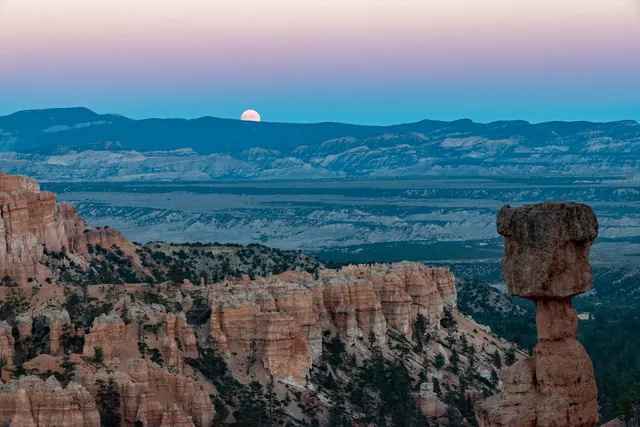
Certified as an International Dark Sky Park in 2019, Bryce Canyon's own park page credits its high elevation, clean air and remote location for some of the darkest skies in the country. The park's official stargazing recommendations highlight Sunset Point, Sunrise Point, Inspiration Point, and Paria View as top overlooks for night viewing. Sunrise Point provides nearly 360-degree views, while Inspiration Point sits very close to its parking lot in case it is cold.
If you are planning an extended trip focused on night photography or telescope programs, the Bryce Canyon stargazing guide covers viewpoint logistics in detail. While Queen's Garden and Navajo Loop trails provide striking hoodoo silhouettes for night photography, in our reading, standing on the rim gives you a wider view of the whole sky for meteors.
Cold nights matter at Bryce Canyon. From October to May, temperatures fall below freezing nearly every night along the rim.
Southeast Utah and Capitol Reef Options
Parks and monuments across central and southeast Utah protect some of the most remote night skies on the Colorado Plateau.
On March 6, 2007, the International Dark-Sky Association certified Natural Bridges National Monument as the first International Dark Sky Park, according to the National Park Service. Natural Bridges preserves primordial darkness with shielded lighting fixtures and motion sensors. Monument trails remain open day and night, allowing you to watch meteors from virtually anywhere inside the boundary. Rangers host stargazing programs here during spring and summer.
Farther west, Capitol Reef National Park gained International Dark Sky Park status in 2015. Located near Torrey, Utah's first certified dark sky community, Capitol Reef offers near-pristine night skies. Its annual Heritage Starfest is usually held in September or early October. If you plan to photograph shooting stars against the sandstone cliffs, remember that park regulations do not permit artificial light painting.
Near Moab, Arches National Park became a certified International Dark Sky Park in 2019. Recommended night viewing spots include Balanced Rock Picnic Area, The Windows Section, Garden of Eden Viewpoint, and Panorama Point. Driving farther north into Arches puts additional distance between your camera and the ambient glow of Moab. Neighboring Canyonlands National Park collaborates through the Colorado Plateau Dark Sky Cooperative, offering deep skies across the park. In southwest Utah, Cedar Breaks National Monument is a designated International Dark Sky Park offering ranger-led astronomy programs.
Staying Close for a Meteor Night
Booking accommodations near your chosen park lets you watch meteors until the early morning hours without facing a tiring midnight drive on unlit rural highways.
Reserving a stay near your viewing spot means you can step outside during peak activity, retreat to a warm bed, and wake up refreshed for morning canyon hikes.
Southern Utah features glamping retreats situated near dark skies. The guides to glamping in Utah and romantic getaways in Utah cover stay options in southern Utah for a night under the stars.
At Dark Light Collection, we design our accommodations specifically for the night sky. Near Bryce Canyon, our glass pyramids sit on private land about 15 minutes from Bryce Canyon National Park and about 1 hour from Zion National Park. The property features up to 25 glass units arranged in an Orion's Belt pattern, with views toward the Sevier River and Red Canyon about 10 minutes away.
Each pyramid features triple-pane heated glass with smart tinting, a king bed positioned for skywatching, an en-suite bathroom, a private deck with heated loungers and a fire pit, and a personal deck telescope. Guests can download nightly astrophotography captured from the pyramid's coordinates or schedule private guided astronomy sessions. The pyramids open in 2027, and founding deposits are open now with priority selection of pyramid size, view, and position (see the refund policy for deposit terms).
Our Takeaway for Planning a Utah Meteor Night
For a successful Utah meteor night, pick the dark sky park closest to your bed, position yourself under an open horizon, and treat lunar phase and cloud cover as the decisive factors.
This recommendation applies to travelers planning a dedicated night-sky excursion in southern Utah. Our side-by-side comparison shows that all seven featured parks and monuments offer dark night skies. Choosing between Bryce Canyon, Zion, or Capitol Reef should depend on your overnight base rather than on a hunt for the single darkest park.
Who this is not for: this approach does not suit travelers who require a guaranteed meteor sighting on a specific calendar date. Even during major annual peaks, sudden cloud fronts can obscure the sky, and showers vary in strength. If you have only one night in Utah, check the cloud forecast for two parks that afternoon and drive to the clearer one.
What would change our answer: if a bright gibbous or full moon remains above the horizon throughout the night, we recommend shifting your viewing window to the brief interval after moonset, or rescheduling your trip for the week of the new moon. If cloud forecasts show dense overcast over your target park, driving across the plateau to an alternate dark sky park with clear skies will salvage your trip.
Before packing, check the moon percentage on the meteor shower calendar and the cloud forecast, then reserve a founding stay at our Bryce Canyon site, about 15 minutes from Bryce Canyon National Park and about 1 hour from Zion National Park.
Near Bryce Canyon, we designed our glass pyramids with a king bed positioned for sky-gazing, so a meteor night can end with you already in bed.
Frequently asked questions
What time is the meteor shower in Utah?
You can watch during any hour of full darkness, which Zion gives as 1.5 hours after sunset until 1.5 hours before sunrise. Check the meteor shower calendar for peak dates and lunar details.
Can you see a meteor shower from Utah?
Yes. Bryce Canyon's own park page credits its high elevation, clean air and remote location for some of the darkest skies in the country, and Zion, Capitol Reef, Arches and Natural Bridges each publish stargazing guidance too. You need a clear sky and hours when the moon is below the horizon.
What time is best to watch a meteor shower in Utah?
The best time to watch is during full dark on nights when the moon has set or has not yet risen. Zion guidance notes that the sky is darkest from 1.5 hours after sunset until 1.5 hours before sunrise.
Where is the best place in Utah to watch a meteor shower?
The best place is the dark sky park or monument closest to your lodging that offers wide, open horizons. Bryce Canyon rim viewpoints like Sunrise Point and Inspiration Point offer expansive 360-degree views, while Zion's east side and Kolob Terrace Road provide dark skies away from canyon walls. Natural Bridges and Capitol Reef also offer near-pristine darkness.
Can you watch a meteor shower from inside Zion Canyon?
You can see bright meteors from locations listed under Zion Canyon such as the Pa'rus Trail and the Zion Human History Museum patio, but in our reading the canyon walls cut off part of the sky. For the best view of incoming shooting stars across the entire sky, head to open mesa viewpoints like Checkerboard Mesa pullout, Lava Point Overlook, or Timber Creek parking lot.
Reserve Your Utah Dark Sky Pyramid
Get early access to our pyramids near Bryce Canyon and Glacier, with priority booking to all locations.
Reserve Your Pyramid Why dark sky →