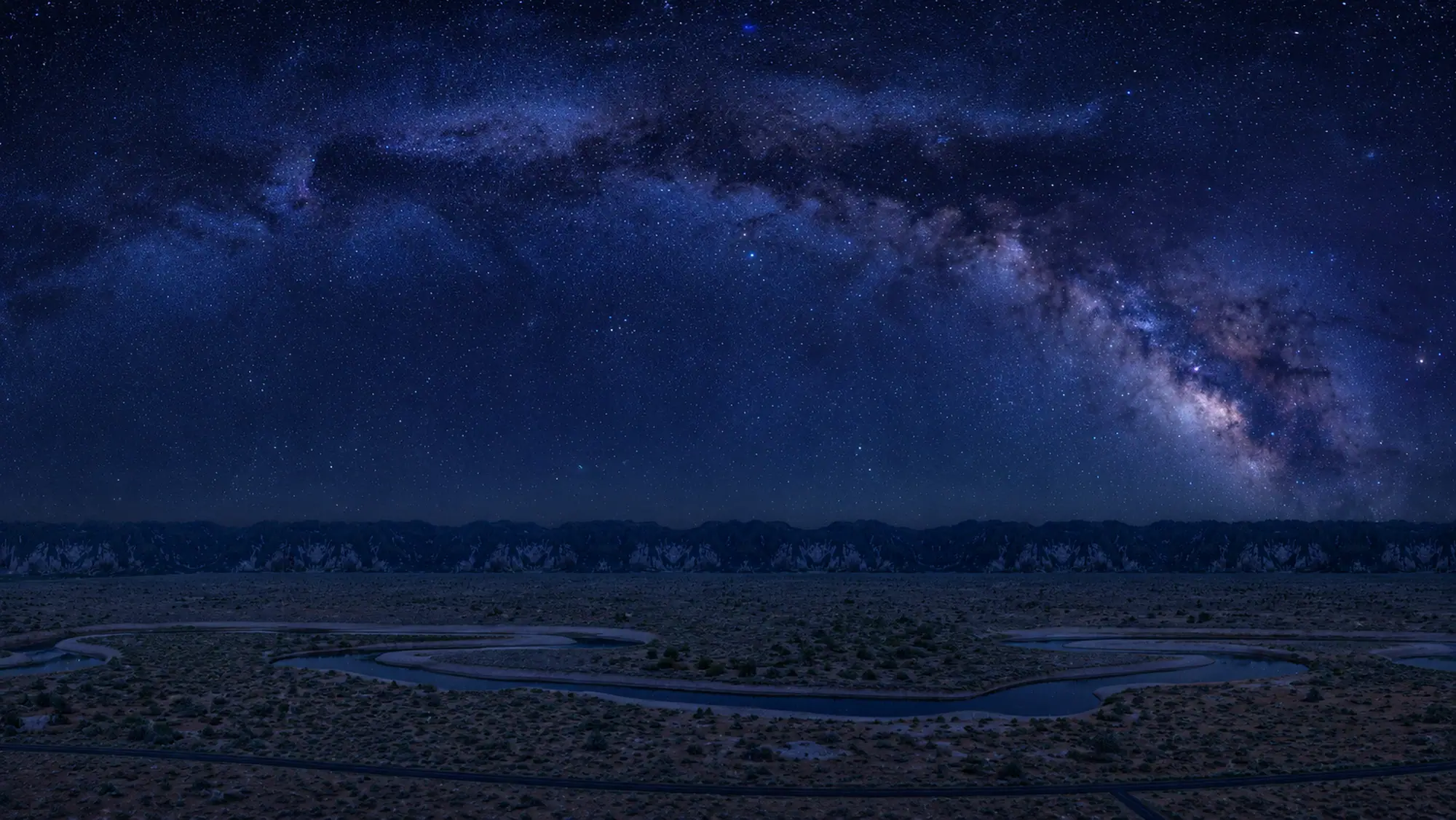
Death Valley stargazing provides a humbling experience under Gold Tier dark skies certified by the International Dark-Sky Association. Top locations include Mesquite Flat Sand Dunes, Harmony Borax Works, Ubehebe Crater, and Badwater Basin on a new moon. For the clearest views, open areas with slight elevation outperform low basins where mountain ranges block stars near the horizon.
Death Valley Stargazing Conditions and Dark Sky Quality
Death Valley National Park delivers exceptional night sky clarity as an International Dark Sky Park certified by the International Dark-Sky Association. The International Dark-Sky Association classifies Death Valley at its highest (Gold Tier) level. In these conditions, observers can view celestial objects that are not visible elsewhere in the world. Night sky darkness can also be explored using the Bortle scale.
Experience Dark Skies in Comfort
Get early access to our pyramids near Bryce Canyon and Glacier, with priority booking to all locations.
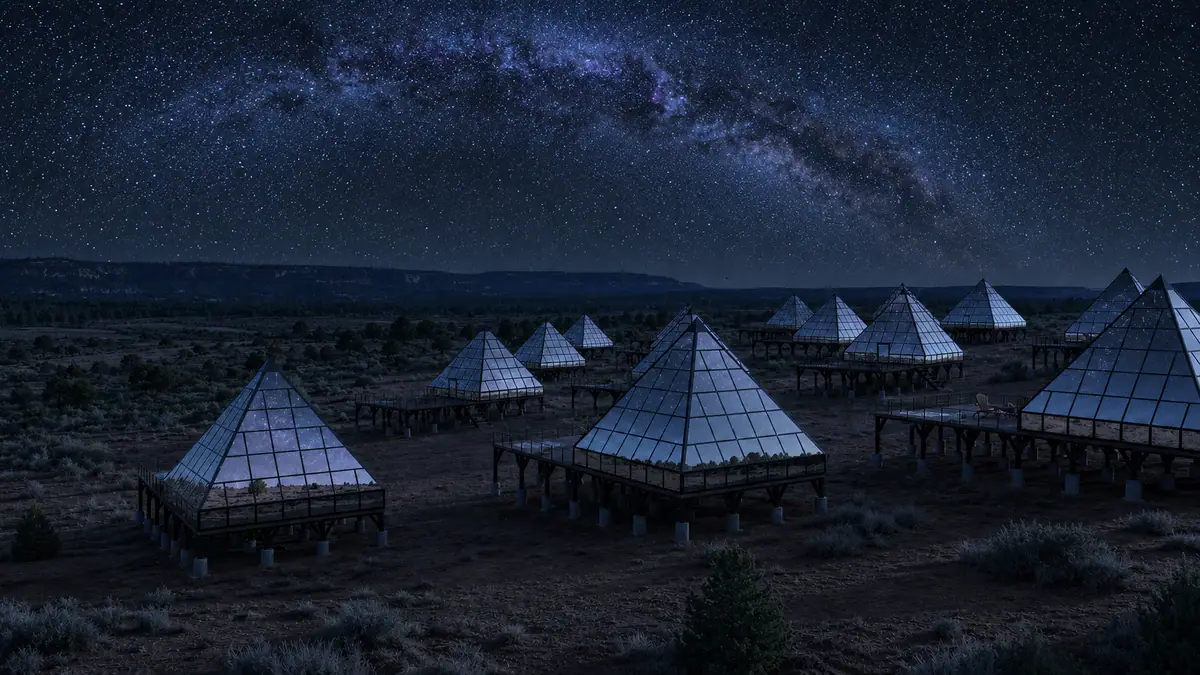
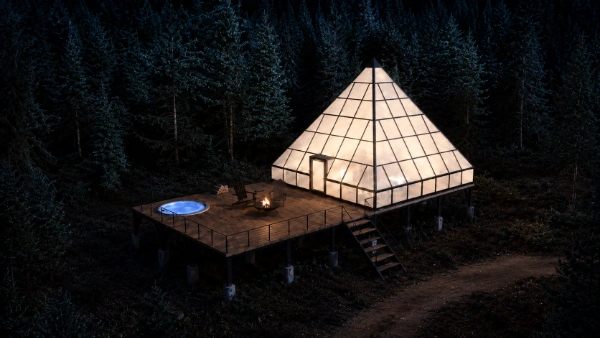
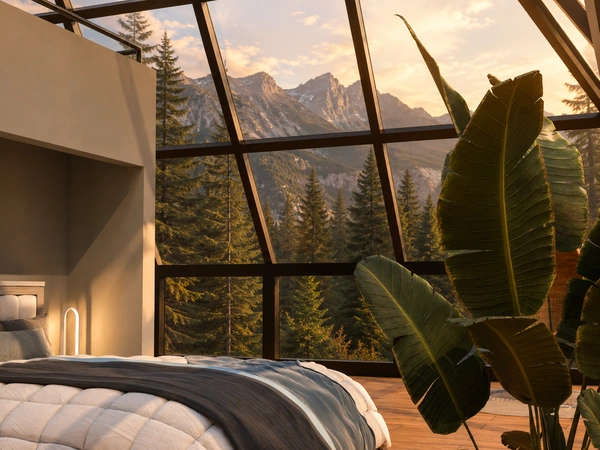
Concept renderings
Preserving this natural darkness requires deliberate management. Death Valley was certified by the International Dark-Sky Association as the third International Dark Sky Park in the national park system, as noted by the National Park Service, after improving facility fixtures around Furnace Creek and Stovepipe Wells. Shielded exterior fixtures direct illumination downward toward walkways and parking lots rather than scattering glow into the upper atmosphere. Outdoor lighting improvements at facilities in the Furnace Creek and Stovepipe Wells areas reduced sky glow and energy waste.
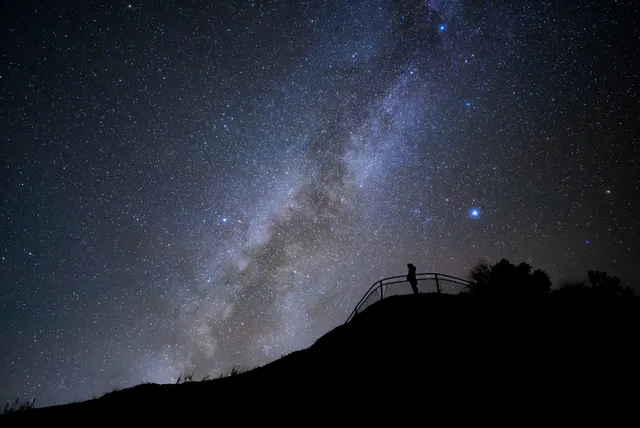
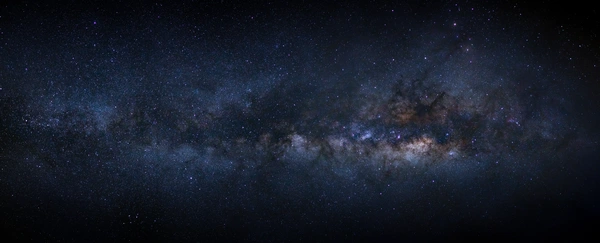
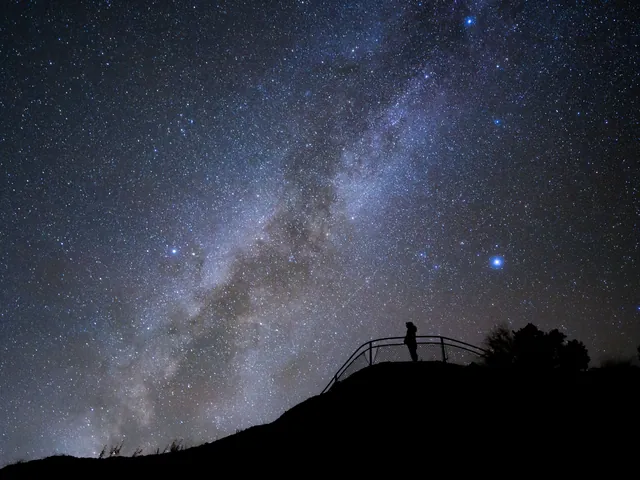
With little light pollution, Death Valley provides an excellent environment to view the Milky Way. At Dark Light Collection, we design our glass pyramids around nights like these, with a king bed positioned for sky-gazing and a private deck for looking up.
Top Viewing Locations Across the Basin
Mesquite Flat Sand Dunes, Harmony Borax Works, Ubehebe Crater, and Badwater Basin are good places to stargaze in Death Valley. While the valley floor has expansive desert flats, towering mountain ranges border the basin. When standing at deep depressions, high ridgelines block stars rising in the lower sky. Large open areas with some elevation give you the widest sweep of sky.
| Spot | Why go | Watch out for |
|---|---|---|
| Mesquite Flat Sand Dunes | Wide open views for night sky viewing and night photography | Nighttime temperatures can exceed 100 F (38 C) in summer, bring water |
| Harmony Borax Works | Good night-sky viewing away from lodging and roads | Camping along paved roads is prohibited while viewing or photographing |
| Ubehebe Crater | Dark crater setting for night sky viewing | Accessibility varies by location; ask a ranger about the spot you plan to visit |
| Badwater Basin | Full-moon strolls; deep basin so mountain walls block low stars | Mountain walls block rising stars near the horizon due to deep basin depth |
| Zabriskie Point | Frequently chosen by astrophotographers to capture their night images | Camping along paved roads is prohibited |
For casual stargazing, broad ground with minimal obstruction gives you the clearest picture of constellations as they transit the sky. Mesquite Flat Sand Dunes offers wide open perspectives for night sky viewing. Harmony Borax Works provides good night-sky viewing opportunities away from lodging and major roads. At Badwater Basin, the surrounding mountain ranges cut off lower portions of the celestial sphere.
Optimal Timing and Moon Phases
The most favorable window for observing stars in Death Valley occurs during the new moon, when the lunar disk is unlit and ambient light reaches its lowest level. During this lunar phase, the absence of natural moonlight ensures the sky is darkest so you can see the most stars. If your travel falls during a full moon, a casual stroll at Mesquite Flat Sand Dunes or Badwater Basin offers the best natural lighting.
Your eyes require roughly 30 minutes in continuous darkness to achieve full adaptation to the night sky. Equipping your flashlight with a red filter or placing red cellophane over the lens minimizes the effect of the light on your adjusting eyes. Bringing a simple pair of binoculars is a great way to get a closer look at the stars.
Seasonal events also dictate the night schedule across the park. Park rangers offer structured night sky presentations at prominent park landmarks throughout the winter months. Visitors can consult park information centers or the official park calendar for current schedules. Every spring, the park hosts an annual multi-day Dark Sky Festival featuring specialized ranger walks, interactive activities, and guest presentations from scientific institutions such as NASA, JPL, the Goddard Space Flight Center, and SETI. Exact dates vary annually and appear on official event schedules.
If you visit in July or August, plan around summer nights that can stay above 100 F (38 C) and bring plenty of water.
Night Regulations and Desert Safety
Death Valley National Park has no closing time, and all stargazing activities are covered under standard park entrance fees. However, park regulations strictly prohibit camping alongside paved roads. Photographers may park along major roadways while photographing, but camping along paved roads is prohibited.
Nighttime temperatures can still be over 100 degrees Fahrenheit (38 degrees Celsius) during the summer. Always bring a flashlight and water when exploring the park at night.
Casual strolls along level ground at Badwater Basin or Mesquite Flat Sand Dunes can be quite rewarding, especially when moonlight guides your steps. Park rangers do not recommend hiking at night in areas with obstacles such as rocks. If traveling with pets, note that park rules prohibit domestic animals on standard hiking trails. Pets can go where vehicles can go, so a night hike up a dirt road is a great way to experience the park after dark with a pet.
Night Photography and Equipment Setup
Astrophotographers in Death Valley often choose places such as Zabriskie Point, Mesquite Flat Sand Dunes, and Harmony Borax Works to capture night images.
When planning your shooting schedule, keep an eye out for passing spacecraft alongside celestial targets. Observers can use NASA's Spot the Station app to receive notifications when the International Space Station is visible.
The Park to Park in the Dark Route
The Park to Park in the Dark highway corridor serves as Nevada's first astro-tourism route, connecting Death Valley National Park to Great Basin National Park. This scenic driving route winds across rural sections of California and Nevada, linking two certified International Dark Sky Parks across some of the darkest areas in the country. Local desert communities, non-profit groups, and land management agencies established the route, encouraging night recreation while raising awareness for dark sky conservation.
The route offers stargazing, telescope viewing and astrophotography along with daytime activities. Services are limited to the towns of Beatty, Goldfield, Tonopah, Ely, and Baker. Between these outposts stretch long highway sectors without cell service, restrooms, or gas stations.
Dark Skies Near Bryce Canyon and Glacier
Our Dark Sky Parks guide explains what a Dark Sky Park is. While Death Valley offers dark desert skies, travelers seeking dramatic canyon amphitheaters can explore dark skies in our Bryce Canyon stargazing guide.
Our glass pyramids stand on private land near Bryce Canyon (about 15 minutes away) and near Glacier National Park (within 15 minutes of the West Entrance), never inside a national park or a Dark Sky Park boundary. Opening in 2027, our retreat features custom glass pyramids positioned in an Orion's Belt formation, complete with heated glass, king beds angled toward the sky, private fire pits, and personal deck telescopes.
Death Valley is the certified pick for a dark night in the California desert, best on a new moon from open higher ground, with winter ranger programs and summer night heat shaping when to go. If park authorities alter access roads, safety guidelines, or regional conditions, consult the official park page before departing. Reserve your founding spot with us or confirm your park itinerary today to enjoy Death Valley stargazing under an unpolluted sky.
Standing beneath thousands of stars across the desert basin reveals the quiet grandeur of natural darkness. Explore our why dark sky collection to learn how unblemished night environments restore our connection to the cosmos.
Frequently asked questions
Is Death Valley good for stargazing?
Yes. Death Valley National Park is classified at the Gold Tier level by the International Dark-Sky Association, which is the highest designation for night sky darkness. Remote desert terrain and low light pollution allow visitors to see celestial phenomena and faint stars that remain hidden in most parts of the country.
Where to stargaze in Death Valley?
Good locations are Mesquite Flat Sand Dunes, Harmony Borax Works, Ubehebe Crater, and Badwater Basin. Visitors should favor open ground with some elevation over deep valley floors, because surrounding mountains can block stars rising near the horizon.
Can you see the Milky Way in Death Valley?
Yes. With very little artificial light pollution, Death Valley offers clear views of the Milky Way, especially during moonless new moon phases. Astrophotographers frequently choose landmarks such as Zabriskie Point, Mesquite Flat Sand Dunes, and Harmony Borax Works to capture night images.
Does Death Valley stargazing require reservations?
No reservations are required for stargazing in Death Valley National Park. The park has no nightly closing time, allowing travelers to enter and view the night sky at any hour without special permits.
Is Death Valley stargazing free?
Stargazing is included in the regular park entrance fee, with no additional activity fees charged for night sky viewing or standard ranger astronomy programs. Camping along paved roads remains prohibited throughout the park.
Experience Dark Skies in Comfort
Get early access to our pyramids near Bryce Canyon and Glacier, with priority booking to all locations.
Reserve Your Pyramid Why dark sky →