
Glacier National Park stays open year-round, but most of its roads close to cars once snow arrives. The National Park Service (NPS) asks winter visitors to plan ahead and be entirely self-sufficient, because services are very limited. A winter visit centers on Lake McDonald, cross-country skiing and snowshoeing.
What Stays Open in Glacier National Park in Winter
Glacier National Park is open year-round, but in winter most roads close to cars and most services shut. Businesses and services in and near the park run mainly from late May through September, and most are closed from early October through late May.
- Open: the park itself, the plowed stretch of Going-to-the-Sun Road from West Glacier to Lake McDonald Lodge, restrooms at Apgar Visitor Center, and primitive camping at Apgar Campground.
- Closed: lodging inside the park, St. Mary and Logan Pass Visitor Centers, most other roads to vehicles, and the park shuttle.
- Changed: Apgar Visitor Center opens on weekends as staffing allows, and entrance fees drop to winter rates.
Bring food, traction for your boots, a full fuel tank and a paper map. No vehicle reservations are required anywhere in the park in 2026.
How Far You Can Drive on Going-to-the-Sun Road in Winter
In winter, cars can drive Going-to-the-Sun Road from West Glacier to Lake McDonald Lodge, weather permitting, and no farther. The vehicle gate sits just past the closed lodge, and the lodge parking lot stays open for skiers and snowshoers, with a vault toilet nearby. Past the gate, the snow-covered road is often open to skiing, snowshoeing and hiking as conditions permit.
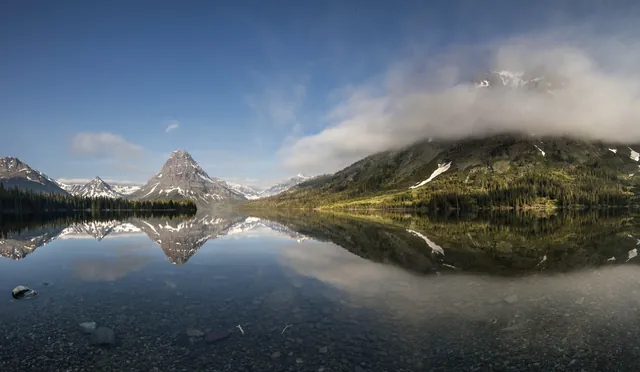
The drive ends at Lake McDonald, where waterfowl gather on the water in winter. White-tailed deer are the large mammals you are most likely to see, and ravens are likely.
In fall, the road usually stays fully open until the third Monday in October, conditions permitting. The west-side gate then moves to Avalanche Creek or Lake McDonald Lodge as weather dictates, and weather sets the east-side gate location too. In past years, cars could reach Avalanche Creek through mid-December before the gate moved back to Lake McDonald Lodge for the rest of winter.
Winter weather shut the alpine section from Avalanche to Jackson Glacier Overlook at 7 p.m. on Friday, October 9, 2026, with reopening tied to conditions. Gate locations move with the weather, so check the park's current conditions page on the morning you drive.
Other Roads in Winter
- Many Glacier Road closes the third weekend in November, weather permitting.
- Two Medicine Road closes once snow requires it, and its ski routes start at the end of the plowed road, usually 4 miles north of East Glacier.
- Polebridge is reached by County Road 486 north from Columbia Falls, which is infrequently plowed.
Spring plowing takes two to four months. The full road has no set opening date and is typically fully open by early July. If your trip depends on driving the whole length of Going-to-the-Sun Road or sleeping in a park lodge, winter does not fit that plan, and the best time to visit Glacier guide covers the summer window.
Cross-Country Skiing and Snowshoeing Routes
Glacier's most popular winter ski route is the unplowed stretch of Going-to-the-Sun Road past Lake McDonald Lodge. You park at the lodge lot and continue past the gate on the unplowed road.
Beyond the Lake McDonald Lodge Gate
- McDonald Falls: about 4 miles round trip, skiing 1.8 miles up the road.
- Sacred Dancing Cascade: 5.3 miles round trip.
- Avalanche Picnic Area: 11.6 miles round trip.
Trail of the Cedars is generally not good skiing.
Other Routes by Area
- Apgar: Lower McDonald Creek (2 to 3 miles round trip), Rocky Point (6 miles), Apgar Lookout (10.5 miles, difficult for beginners) and McGee Meadow Loop (11.5 miles).
- Polebridge: the Covey Meadow loop, suited to families with small children, and Bowman Lake (12 miles round trip).
- Two Medicine: Running Eagle Falls (10 miles round trip) and the strenuous 16-mile round trip to Two Medicine Lake.
- St. Mary: Red Eagle Lake Trail (8 miles round trip).
Gear, Rentals and Rules
There are no ski or snowshoe rentals inside the park, so rent in a nearby community before you drive in. Snowmobiles are not permitted anywhere in Glacier. Pets are not allowed on trails, unplowed roads or in the backcountry.
Ranger and Guided Snowshoe Walks
In 2026, ranger-led snowshoe walks ran Saturdays and Sundays at 1:00 p.m. from January 10 to March 15. Walks were canceled when West Glacier was forecast below 10°F, and they were not recommended for children under six. A limited supply of snowshoes rented for $2 at Apgar Visitor Center, starting 1 hour before each walk.
The 2026 to 2027 walk dates have not been announced yet, so check the guided winter activities page before a trip. Authorized guide companies also run guided snowshoe and ski tours, listed on the guided winter activities page. Their guides hold Wilderness First Aid and cardiopulmonary resuscitation (CPR) training, plus an avalanche course taken within the past three years.
Visitor Centers, Camping and Fees in Winter
Apgar Visitor Center, north of the West Entrance, is the visitor center to plan around in winter. St. Mary and Logan Pass Visitor Centers close for the season, while Apgar opens on weekends as staffing allows. Restrooms at Apgar stay open year-round, a water-bottle filling station is there, and winter recreation brochures and maps sit at Apgar and in the park headquarters lobby.
Food, Lodging and Camping
Lodging is not available inside the park in winter, so book a room outside it. The Apgar Village campstore may be open for snacks and drinks, and full-service grocery stores are in Hungry Horse and Columbia Falls. Fill up before you enter the park.
Loop B of Apgar Campground stays open for first-come, first-served primitive camping, with a vault toilet and no running water. Primitive camping is also available year-round at St. Mary Campground. Wilderness camping needs a permit in every season.
Pick up a backcountry permit in person, up to 24 hours ahead, at the Apgar Backcountry Permit office. For St. Mary ski routes, winter backcountry permits come from the Hudson Bay District Office, so call ahead. The park's phone number is 406-888-7800.
Winter Entrance Fees
Winter rates apply from November 1 to April 30, and standard passes are valid for 7 days.
- Private vehicle: $25 (summer rate $35)
- Motorcycle: $20 (summer rate $30)
- Per person: $15 (summer rate $20)
November 11, 2026, is a fee-free day for United States citizens and residents. Pass options and current rates are on the park's fees page.
Winter Safety in Avalanche Terrain and Bear Country
Avalanches are a major winter danger in Glacier and can be deadly. Risk rises after:
- a foot or more of new snow, or heavy snowfall
- sustained winds over 15 miles per hour
- sudden temperature changes
Avoid cornices, steep open slopes and gullies, and never stop in or below an avalanche path. In avalanche terrain, carry a shovel, probe and transceiver. Trips across the park involve extreme avalanche and terrain hazards and are for experienced, well-equipped parties only.
For avalanche information, contact the Flathead Avalanche Center at 406-257-8402. Most winter routes are unmarked, so carry a topographic map and sign in at the trailhead register box. Ice is common on roads and heavily skied trails, and if you plan to walk past the Avalanche Creek gate in late fall, bring traction aids.
Frozen lakes are very dangerous and not recommended for travel. Watch for tree wells when you ski through forest. Bears may still be active in winter, so carry bear spray and stay alert.
Most of the park sits under several feet of snow in winter, and the average snowpack settles to about 16 feet. On the east side, downslope gusts often reach 50 miles per hour and sometimes 100, and one blizzard dropped 44 inches in a single day. Chinook winds can raise temperatures by more than 30°F in minutes, so pack layers for deep cold and a sudden thaw. The Glacier weather guide has temperatures by month.
Skiing Near Glacier National Park in Winter
Whitefish Mountain Resort, in Whitefish, Montana, offers lift-served downhill skiing outside the park. Opening day for the 2026/27 season is slated for Friday, December 4, 2026.
Whitefish Mountain Resort has 13 lifts, a summit at 6,817 feet and a base at 4,464 feet. Glacier Park International Airport is 19 miles from the resort by car.
Choose the resort for lift-served runs and the park for touring on unplowed roads and trails.
Winter Nights Near Glacier's West Entrance
Glacier is part of Waterton-Glacier International Dark Sky Park, which gained provisional status in 2017 and full certification in 2021. It was the first International Dark Sky Park to cross a national border.
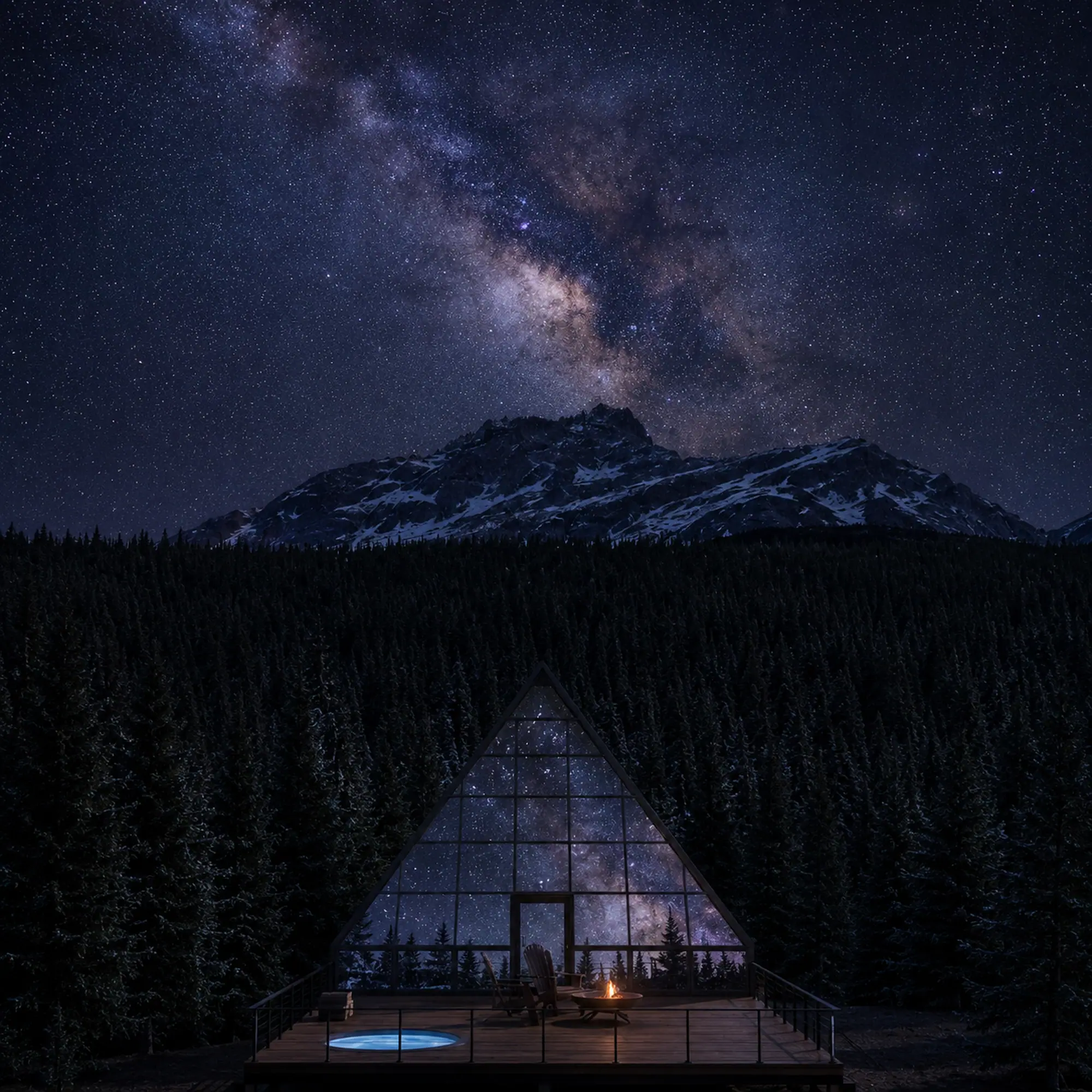
At Dark Light Collection, we plan glass pyramids on private land within 15 minutes of Glacier's West Entrance, with opening targeted for 2027. Each pyramid is designed with triple-pane glass heated for snow-melt, a king bed positioned for sky-gazing, and a private deck with a fire pit, heated loungers and a telescope. The Glacier pyramid site sits about 20 minutes from Lake McDonald and about 5 minutes from Hungry Horse Lake.
To plan Glacier National Park in winter, check the current conditions page for the road gate before you leave, then pick a ski route that starts at that gate.
Waterton-Glacier is a certified International Dark Sky Park, and you can compare it with other certified skies in our list of dark sky parks in the US.
Frequently asked questions
Does Glacier National Park close in the winter?
No. Glacier National Park is open year-round, but most roads close to cars in winter, and most businesses and services in and near the park are closed from early October through late May.
Is it worth going to Glacier National Park in winter?
A winter trip suits travelers who want to ski or snowshoe snow-covered roads and can bring their own food, fuel and gear. If you want to drive the full Going-to-the-Sun Road or stay in park lodging, go in summer instead, since the road is typically fully open by early July.
Can you drive Going-to-the-Sun Road in winter?
Only from West Glacier to Lake McDonald Lodge, weather permitting. Past the gate just beyond the lodge, the road is often open to skiers, snowshoers and hikers as conditions permit.
What is Glacier National Park like in November?
In November, the west-side road gate sits at Avalanche Creek or Lake McDonald Lodge, depending on weather. Winter entrance fees start November 1. Many Glacier Road closes the third weekend in November, weather permitting, and snow can reach lower elevations as early as mid-September.
Stay Near Glacier's West Entrance in 2027
Founding deposits are open now for glass pyramids on private land within 15 minutes of Glacier's West Entrance.
Reserve Your Pyramid Stay near Glacier →