
The best time to visit Glacier National Park is mid-July to early September, when Going-to-the-Sun Road is typically open end to end and summer services are running. Winter works only for visitors ready to be entirely self-sufficient.
Best Time to Visit Glacier National Park at a Glance
Plan a first trip for the weeks after Going-to-the-Sun Road opens across Logan Pass and before visitor centers start closing for the year. The road has no set opening date but is typically fully open by early July, and most park businesses and services run through September.
Match the month to the trip you want:
- Every road and service open: midsummer into the start of September.
- Thinner crowds and changing leaves: September, as the trees start to turn and wildlife becomes more active.
- Late fall color: mid-October, when the western larch turns yellow.
- Skiing and snowshoeing: winter, on Going-to-the-Sun Road as conditions permit, if you can be entirely self-sufficient.
Skip May and June if driving the full length of Going-to-the-Sun Road is the reason for your trip, because plows are still clearing the high section. Summer is also the wrong pick if you want trails to yourself. September is quieter, though you will still pass many hikers on the trails through the month.
Glacier National Park Season by Season
Glacier is open year-round, but road access and services change sharply from one season to the next. The table shows the typical pattern for each season.
| Season | Road access | Services | Private vehicle fee | Best for |
|---|---|---|---|---|
| Spring (May to June) | Most roads open by late May; Going-to-the-Sun Road over Logan Pass closed to cars during plowing | Most reopen late May or early June | $35, valid 7 days | Hiking or biking Going-to-the-Sun Road during plowing |
| Summer (July to August) | Going-to-the-Sun Road typically fully open by early July | Summer season services open | $35, valid 7 days | The full scenic drive |
| Fall (September to October) | Going-to-the-Sun Road typically fully open until the third Monday of October | Visitor centers close late September and early October; no lodging in the park late in the season | $35, valid 7 days | Fall color and fewer crowds |
| Winter (November to April) | Most roads closed; West Glacier to Lake McDonald Lodge usually plowed | Most businesses and services closed | $25, valid 7 days | Skiing and snowshoeing |
Weather adds a second layer to the calendar. The park straddles the Continental Divide, so the west side and the east side can see very different conditions on the same day. Western valleys generally receive the most rainfall and can exceed 90 °F, while strong winds, sunny days and cooler temperatures are common on the east side.
Glacier National Park in July and August
July and August give full road access to Glacier by car, and they draw the largest crowds of the year. The National Park Service names May through September as the busy season, with those two months the busiest of all.
The main draw is Going-to-the-Sun Road, open over Logan Pass after months of snow removal. Most visitors travel by car or recreational vehicle (RV), and most make the drive part of their trip. The Going-to-the-Sun Road guide covers the route itself.
Expect hot days and cool nights. High spots such as Logan Pass generally run 10 to 15 °F cooler than the valleys. Overnight lows anywhere in the park can drop to freezing, and snow is possible at any time of year, so carry rain gear and extra layers even when a hike starts warm.
For a closer look at conditions on each side of the Divide, see the Glacier National Park weather guide. Summer suits travelers who want every road and service open and can accept the busiest weeks of the year. If you would rather trade some access for space, September is the better month.
September and Early Fall Color
September is the best month for visitors who want Glacier with fewer people while Going-to-the-Sun Road is still open over Logan Pass. The park is generally less crowded, wildlife is more active, and the trees are turning color by mid-September. Snow can also fall at lower elevations as early as mid-September, so pack warm layers for every outing.
Roads and Larch Color
Conditions permitting, Going-to-the-Sun Road usually stays fully open until the third Monday of October. After that, the west-side closure gate moves to Avalanche Creek or Lake McDonald Lodge, depending on weather, and the road beyond the gate stays open to hikers and bicyclists. Many Glacier Road closes the third weekend in November, weather permitting, and Two Medicine Road closes once snow builds up.
The last color of the year arrives in mid-October, when the western larch turns yellow. This deciduous conifer loses its needles. Highway 2, which runs along the park's southern boundary, is sometimes the best road for seeing the larch display.
Services and Supplies
Fall visitors need to plan ahead and be self-sufficient. Visitor centers close in late September and early October, and lodging inside the park is not available late in the season. The restrooms at Apgar Visitor Center stay open year-round, and a water bottle filling station sits at the same building, two miles north of the West Entrance.
For food, the camp store in Apgar Village may still be open for snacks and drinks, and the grocery store in St. Mary sometimes stays open. Full-service grocery stores are outside the park in Browning, Hungry Horse and Columbia Falls. Apgar Campground usually offers first-come, first-served primitive camping with a vault toilet and no running water.
For an overnight backcountry trip, wilderness camping permits are issued in person up to 24 hours ahead at the Apgar Wilderness Permit Office, which stays open through the end of October. Bears spend more time foraging before hibernation, and you may see animals grazing along the roads. Watch them with binoculars or a long lens, never approach or feed them, and carry bear spray on every trail.
Fall is a poor fit if you want to sleep inside the park or rely on visitor centers late in the season.
Spring Plowing Season
Spring in Glacier means partial access, because crews spend months clearing snow from the park's roads. The snowpack averages around 16 feet, and plowing can take two to four months. By late May most roads are open to cars, with one exception: Going-to-the-Sun Road over Logan Pass.
While Going-to-the-Sun Road is being plowed, it is often open to hikers and bicyclists only, as conditions permit, from early May until it opens to cars. Crews normally reach Logan Pass by late June, and the lower portions of the road stay open to cars year-round.
Plan for limited services and cool, wet weather. Most services in and near the park reopen in late May or early June, and accommodations inside the park are very limited. Rainy days stay common even through June.
Higher-elevation trails can be dangerous and snow-covered until late June. Bears are very active in spring, so stay alert and carry bear spray. Primitive camping is available year-round at Apgar and St. Mary Campgrounds, and wilderness camping needs a permit in every season.
Skip spring if your trip centers on the full drive or alpine hikes. Pick it if a car-free ride or walk up the road appeals to you more than the views from Logan Pass.
Winter in Glacier
Winter in Glacier suits visitors who can be entirely self-sufficient, since weather closes most park roads and most nearby businesses are closed from early October through late May. Several feet of snow cover most of the park, and cloudy, snowy days are common.
The stretch of Going-to-the-Sun Road from West Glacier to Lake McDonald Lodge is usually plowed and open year-round, weather permitting. As conditions permit, Going-to-the-Sun Road is often open to skiing and snowshoeing. Bears may still be active, so keep bear spray in your pack.
The east side brings its own hazards. Downslope gusts there often reach 50 mph or more and sometimes 100 mph, and chinook winds can raise temperatures by over 30 °F in minutes. When cold Arctic air pools deep enough on the east side to spill over the Divide into Pacific moisture, blizzards can result. One dropped 44 inches of snow in a single day.
The private vehicle entrance fee drops to $25 from November 1 to April 30, compared with $35 in summer, and either pass is valid for 7 days. Accommodations near the park are very limited in winter. For road and weather updates near the entrances, tune to the Travelers' Information Station at 1610 AM or call the park at (406) 888-7800.
Winter is the wrong season if you want the scenic drive or reliable services. Come in winter only for skiing, snowshoeing and the lower part of the park.
For how far you can drive, ski routes and what stays open, see is Glacier National Park open in winter?.
Crowds and the 2026 Access Rules
For 2026, Glacier does not require vehicle reservations anywhere in the park, so you can enter on any day without a timed booking. The main 2026 summer rule applied at Logan Pass. In 2026, from July 1 to September 7, Logan Pass parking had a 3-hour limit, enforced 24 hours a day, with a free timestamped permit from the kiosk.
A $35 private vehicle pass covers seven days.
Crowd levels follow the services calendar. Crowds peak in July and August. September eases the pressure, though visitor centers start closing late in the month.
If a later season adds reservations or changes the Logan Pass window, a summer trip would need more advance planning, and the vehicle reservations and Logan Pass guide tracks the current rules. The National Park Service posts seasonal patterns for roads, visitor centers and camping on its operating hours and seasons page.
The Best Time to Visit Glacier National Park for Stargazing
For stargazing in summer, Going-to-the-Sun Road is typically fully open by early July, so high viewpoints such as Logan Pass are reachable by car, while winter brings many cloudy, snowy days. Nights stay cool even after hot days, and overnight lows anywhere in the park can drop to freezing, so bring a warm layer and a hat.
In 2026 the Logan Pass limit applied around the clock from July 1 to September 7, so night visits in that window needed the kiosk permit. Weather on the west side can differ sharply from the east side on any given day. A cloudy evening in West Glacier says little about the sky over St. Mary.
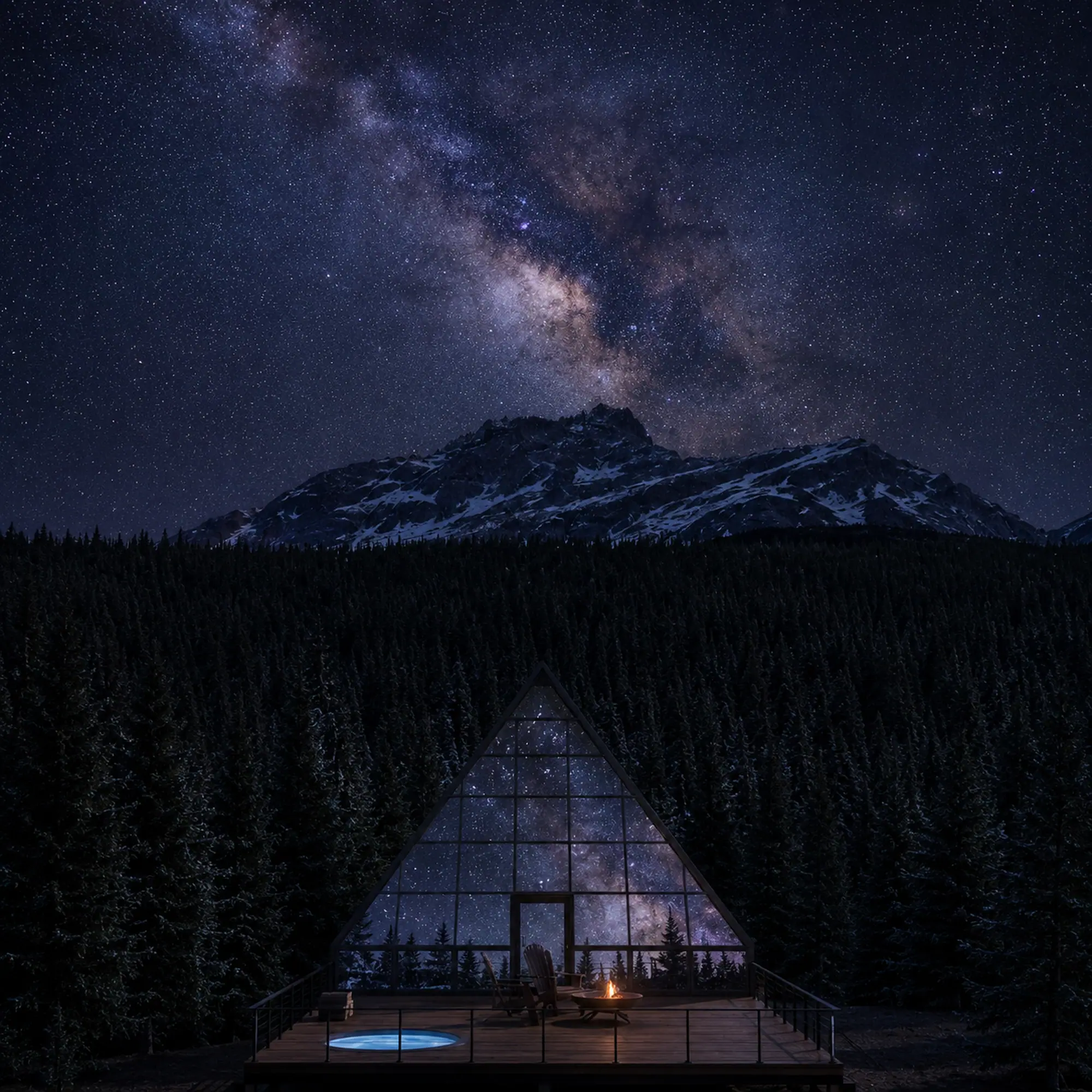
At Dark Light Collection, we are building glass pyramids within 15 minutes of Glacier's West Entrance, opening in 2027. Each one has a king bed positioned for sky-gazing, a personal deck telescope and a private deck with heated loungers, and a built-in projector turns the glass into a cinema on cloudy nights. Once you know the best time to visit Glacier National Park for your trip, place a founding deposit at our Glacier location.
The glass pyramids near the West Entrance are designed with heated loungers on each private deck.
Frequently asked questions
What is the best month to visit Glacier National Park?
For full access, aim for the window from mid-July to early September, when Going-to-the-Sun Road is open and summer services are running. If thinner crowds matter more than having every service open, choose September.
When does Going-to-the-Sun Road fully open?
Going-to-the-Sun Road has no set opening date, and it is typically fully open by early July. It typically stays fully open until the third Monday of October, weather permitting.
Is September a good time to visit Glacier?
Yes. September is less crowded than summer, wildlife is more active, and the trees start turning color. Visitor centers begin closing in late September, and snow can fall at lower elevations, so pack layers and plan your supplies.
Sleep Under Glass Near Glacier's West Entrance
Founding deposits are open now for Dark Light Collection's glass pyramids near Glacier, opening 2027.
Reserve Your Pyramid Stay near Glacier →