
Glacier National Park wildlife includes 71 mammal species and over 270 recorded bird species living across alpine peaks, deep forests, and glacial river valleys. Visitors can observe grizzly bears, black bears, mountain goats, bighorn sheep, moose, and elk across the park. At Dark Light Collection, we are building glass pyramids within 15 minutes of Glacier National Park's West Entrance, and we drew these rules and viewing spots from the park's own wildlife pages.
Glacier National Park Wildlife and the Distance Rules
Approaching within 100 yards of bears or wolves is prohibited in Glacier National Park, while visitors must maintain at least 25 yards from all other wildlife.
Plan Your Glacier Wildlife and Stargazing Getaway
Get early access to our pyramids near Bryce Canyon and Glacier, with priority booking to all locations.
Concept renderings
According to National Park Service (NPS) regulations at Glacier National Park Bear Safety, intentionally approaching, viewing, or engaging in any activity within 100 yards (91 meters) of bears or wolves is prohibited. For all other animals, including bighorn sheep, mountain goats, elk, deer, and moose, visitors must maintain at least 25 yards (23 meters). If an animal changes its behavior because of your presence, you are too close. Keep the animal's line of travel and escape route clear, and back away immediately if an animal approaches you.
Roadside viewing carries strict requirements. If you spot a bear along the road, do not stop near it. Roadside bears quickly become habituated to traffic and people, increasing their chances of being hit by vehicles. To view a roadside bear safely, drive at least 100 yards past the animal and pull over in a safe location. To protect human life and property, bears that search for human food must be removed from the park.
In our synthesis of the park's wildlife and bear pages, we matched each species to where the park says it is often seen.
| Animal | Primary Park Locations | Active Seasons and Times |
|---|---|---|
| Grizzly Bear | Mountain meadows, avalanche chutes, berry patches | Spring through fall |
| Black Bear | Forests, avalanche chutes, mountain meadows, berry patches | Spring through fall |
| Mountain Goat | Logan Pass, Goat Lick Overlook on US Highway 2 | Year-round |
| Bighorn Sheep | Logan Pass parking areas, Many Glacier Valley | Year-round |
| Shiras Moose | Fishercap Lake, North Fork, Two Medicine | Year-round |
| Rocky Mountain Elk | Forest edges, Two Dog Flats, prairie borders | Spring through fall; early morning |
| Gray Wolf | North Fork Valley, Belly River, open drainages | Winter and spring |
Grizzly and Black Bears in Glacier
Glacier National Park provides habitat for nearly one thousand bears, including approximately 300 grizzly bears and 600 black bears.
Glacier National Park has two resident bear species, black bears and grizzly bears. Barbed wire hair snags and DNA analysis from 34,000 hair samples estimated around 300 grizzly bears and 600 black bears across the ecosystem. Fur color alone does not indicate the species, because both animals range from blonde to dark brown and black. Black bears (Ursus americanus) have a straight snout line from nose to forehead, pointed ears, a prominent rump, and short, curved claws measuring roughly 1.5 inches that allow them to climb trees. Adult male black bears weigh 180 to 250 pounds, with some reaching 400 pounds, while adult females weigh 120 to 180 pounds. Grizzly bears (Ursus arctos horribilis) have a noticeable muscular hump above the shoulders, a dished or concave facial profile, rounded ears, and long, light-colored claws measuring up to 4 inches for digging. Adult male grizzlies weigh 300 to 440 pounds, while adult females weigh 250 to 280 pounds. Both species can reach sprint speeds of 35 miles per hour.
Plants make up more than 90 percent of a grizzly bear's diet, including glacier lily bulbs, grasses, berries, whitebark pine nuts, and roots. In spring and summer, grizzlies also feed on insects such as army cutworm moths, ladybird beetles, and winter-killed animal carcasses. In spring black bears eat mostly grasses, moving to leafy green plants and fruits in summer and berries and nuts in autumn. Because bears are active in spring, summer, and fall, trail safety requires discipline. Park wildlife managers recommend hiking in groups of four or more, as attacks on groups of four or more have never been reported in the park. Make regular noise by clapping and calling out, especially near rushing streams or blind turns where wind and brush deaden sound. Bear bells are not considered adequate or effective.
The park recommends carrying bear spray in an accessible place. Summer ranger programs demonstrate bear spray. See the park's bear safety page before you go. When hiking forest paths such as the Avalanche Lake Trail, stay vigilant around berry thickets and creek beds. Store all edible items, food containers (empty or not), cookware (clean or not) and trash in a vehicle or designated food locker, or hang them, whenever they are not in use, both day and night. Store scented items such as toiletries, feminine products and sunscreen the same way. If you encounter a bear within 100 yards, stop and do not run. Back away slowly while talking in quiet tones to help the animal identify you as human.
If a bear approaches defensively (it appears agitated or charges), the park's steps are:
- Stop, do not run, and talk quietly to the bear.
- Prepare to deploy your bear spray.
- If contact appears imminent and you do not have bear spray, protect your chest and abdomen by falling to the ground on your stomach, clasp your hands around the back of your neck, and leave your pack on for protection.
- If the bear attempts to roll you over, try to stay on your stomach. If the attack is defensive, the bear will leave once it recognizes you are not a threat.
- If the attack is prolonged, fight back.
Mountain Goats, Bighorn Sheep and Where to See Them
Mountain goats and bighorn sheep inhabit Glacier's high alpine cliffs and are commonly seen near Logan Pass and along US Highway 2.
Mountain goats live in alpine habitats and can often be spotted navigating high, narrow cliff ledges with ease. Mountain goats (Oreamnos americanus) are exceptional climbers with split hooves featuring two wide-spreading toes and rough, concave footpads that grip vertical rock faces. They shed their heavy white winter coats in summer, often seeking snow patches or shaded rock walls during warm afternoons. Mountain goats frequently visit the Goat Lick Overlook along US Highway 2, where an exposed mineral seep provides dietary salts. The overlook area includes two smooth, gently sloping paths of about 500 feet each, paved with asphalt and StaLok material, giving visitors safe vantage points over the river and salt deposits.
Rocky Mountain bighorn sheep (Ovis canadensis) live across alpine fellfields, grassy slopes, and mid-elevation ledges. Mature rams carry large, spiraling horns that can weigh up to 30 pounds, backed by reinforced skulls that absorb severe impacts during fall mating contests. Bighorn sheep often appear in the Logan Pass parking area and Many Glacier Valley, where they lick antifreeze from the pavement for salt.
While exploring trails featured in the guide to the best hikes in Glacier National Park, remember that goats and sheep require at least 25 yards of distance. If you are causing the behavior of the animal to change, you are too close. Keep the wildlife's line of travel or escape route clear and move away if an animal approaches you.
Moose, Elk, Deer and Wolves
Glacier's diverse river bottoms and open valleys provide habitat for large ungulates and elusive apex predators.
The Shiras moose (Alces alces shirasi) is better adapted to survival in deep snow than other ungulates in the park due to its long legs, large body mass, and thick fur. Moose prefer willow flats, swampy bottomlands, and calm lake shores alone or in small family groups. Popular spots to watch for moose include Fishercap Lake in Many Glacier, the Two Medicine drainage, and wetland margins along the North Fork.
Rocky Mountain elk (Cervus canadensis nelsoni) gather in summer herds to graze on grasses, sedges, and young aspen bark. While many elk migrate outside the park to lower elevations for winter, summer herds populate open meadow edges. Two Dog Flats, located where eastern grasslands meet the Rocky Mountain foothills, offers excellent morning viewing when scanning forest borders with binoculars. Two species of deer also live throughout the park: northwestern white-tailed deer, which raise their white tail underside when sensing danger, and Rocky Mountain mule deer, which have large ears and black-tipped tails.
Apex predators roam across vast wilderness ranges. The northern Rocky Mountain gray wolf (Canis lupus irremotus) appears in gray, black, or white color phases across the North Fork, Many Glacier, Cut Bank, and Belly River drainages. Wolves are rarely seen, mostly in winter and spring. There has never been a known case of a wolf attacking a human in Glacier. Mountain coyotes (Canis latrans lestes) are smaller, measuring one-third the size of a wolf with tan coats and vocal howls heard at twilight. Mountain lions and Canada lynx also dwell in timbered breaks and subalpine forests, though both cat species are secretive and rarely cross visitor paths.
Small Mammals and Birds Across Diverse Habitats
Glacier National Park shelters more than 270 bird species alongside alpine specialists like marmots, pikas, and wolverines.
High-elevation rock piles and talus slopes host hoary marmots and yellow-bellied marmots, which early settlers called whistle pigs due to their piercing alarm calls. Marmots spend up to 80 percent of their lives underground and hibernate from September through May, with young marmots losing up to half their body weight during hibernation. The American pika, an herbivorous relative of rabbits, cuts alpine grasses all summer to cure into winter haystacks stored deep in rock crevices. Pikas are sensitive to temperatures above 77.9°F (25.5°C) and are most active during cooler parts of the day.
Subalpine meadows also support Columbian ground squirrels, which stand alert outside their burrows and whistle warnings when hawks or predators approach. In thick forests, pine martens hunt small prey along deadfall logs, while short-tailed and long-tailed weasels patrol brush lines, molting to white winter fur with black tail tips. Wolverines travel high alpine ridges year-round, with park records documenting one male climbing 5,000 vertical feet in 90 minutes. Along waterways, northern river otters slide across river ice, and beavers build lodges visible from the Camas Road Bridge over Lower McDonald Creek.
Avian habitats range from turbulent mountain torrents to open airspace above glacier-carved peaks. Upper McDonald Creek supports nesting harlequin ducks, which lay roughly one-quarter of all harlequin broods in Montana. Quiet lakes host common loons, accounting for one-fifth of Montana's nesting loons. Along the Logan Pass boardwalk, white-tailed ptarmigans blend into snowfields and summer scree. American dippers can be seen near fast-moving, clear streams, while bald eagles and golden eagles soar above Lake McDonald Lodge during autumn migrations from September to November. Families exploring Glacier with kids will find ground squirrel burrows and whistling marmots along boardwalk trails to be rewarding wildlife encounters.
Watching Glacier National Park Wildlife Near the West Entrance
Dawn and dusk provide opportunities to view active wildlife across habitats near Glacier's West Entrance.
Planning wildlife outings around dawn and dusk aligns with animal feeding routines. Pack binoculars and a telephoto camera lens, which let you observe natural behaviors without crowding animals or violating park distance rules.
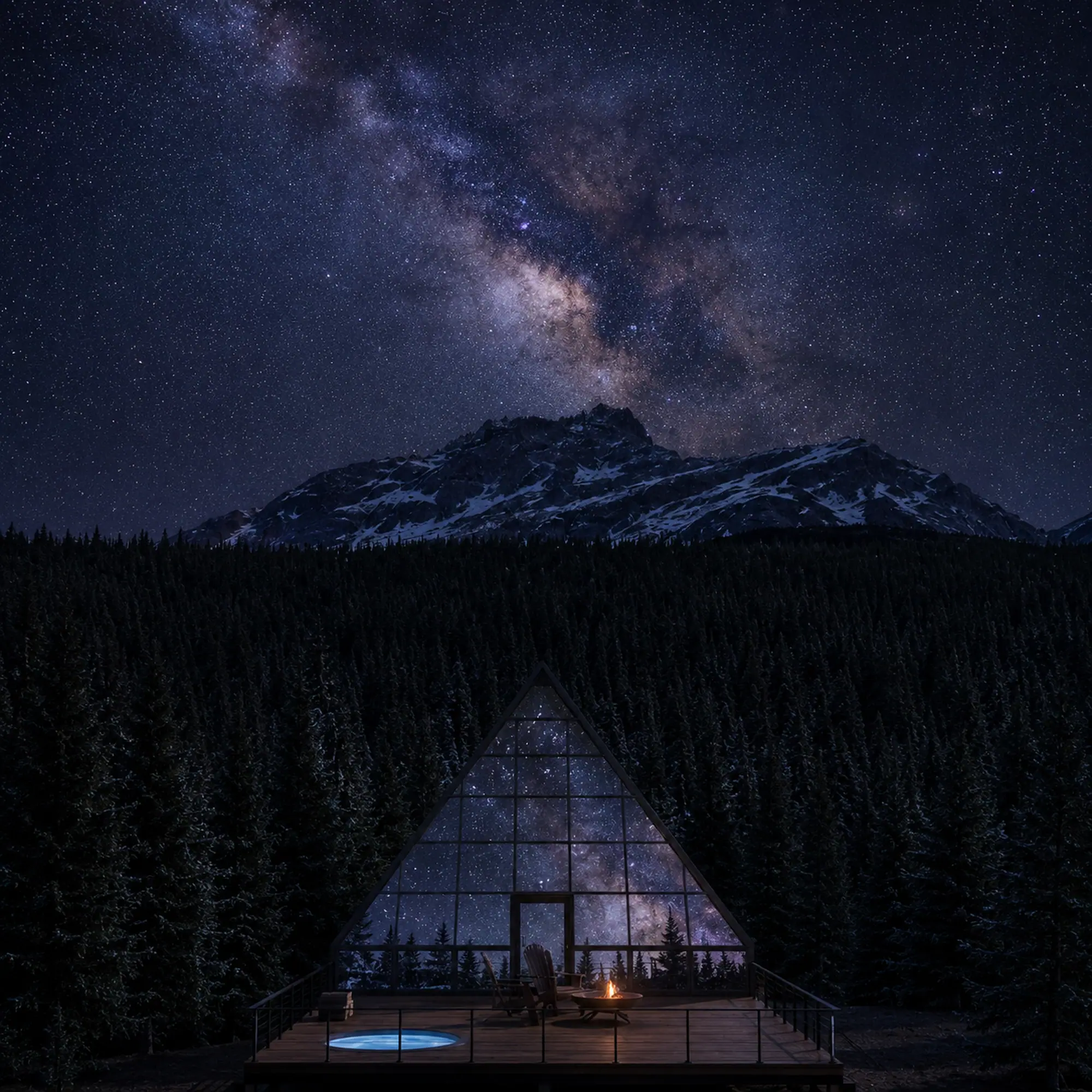
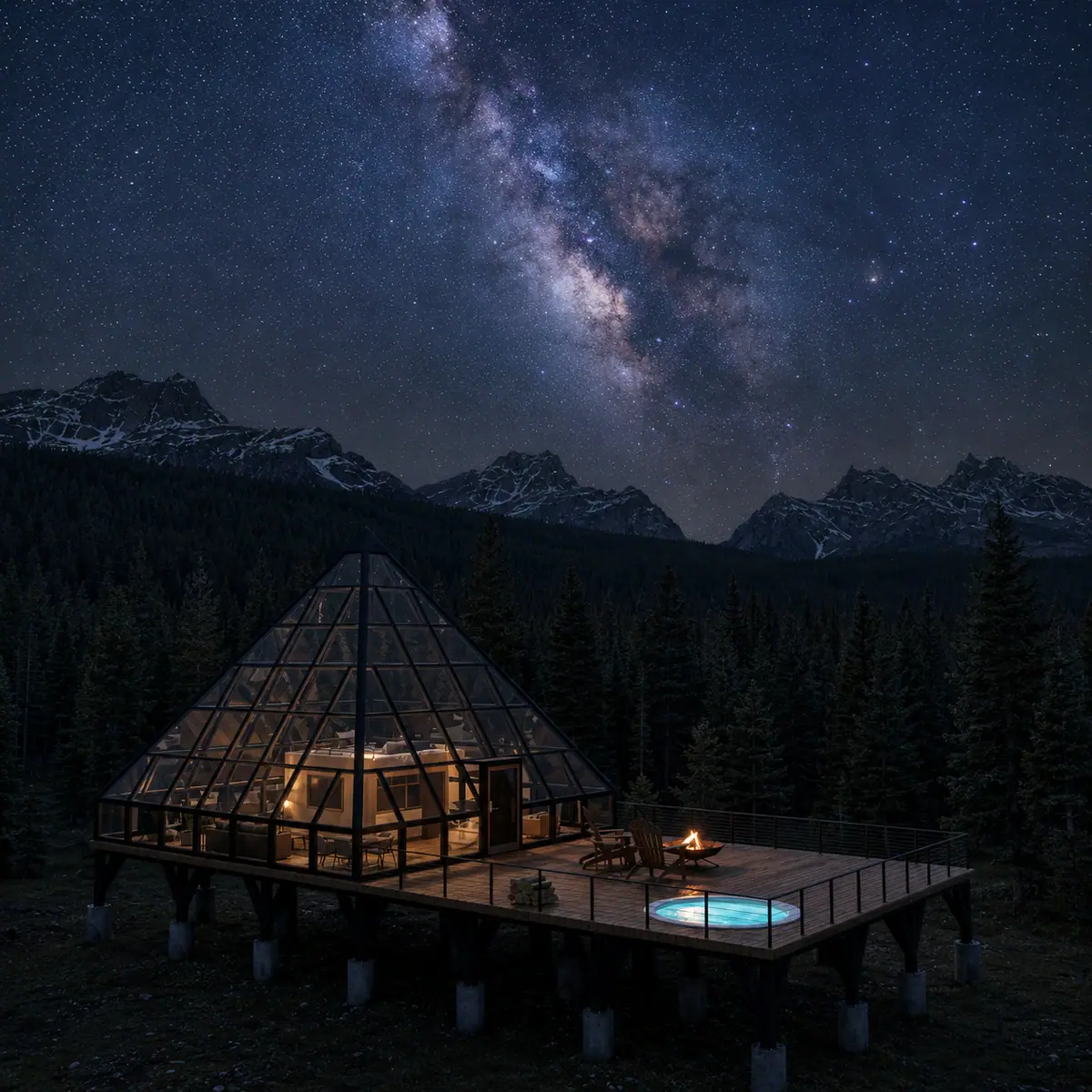
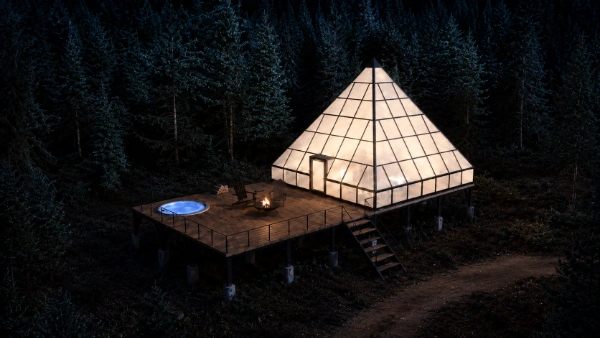
We are building glass pyramids on private land within 15 minutes of Glacier National Park's West Entrance, opening in 2027. Exploring our Glacier pyramids gives travelers a private base near the park, featuring an Orion's Belt layout, heated loungers on outdoor decks, and a personal deck telescope. You can spend the afternoon watching mountain slopes and the night stargazing from your private deck.
Plan wildlife viewing around the overlooks and trails park biologists name for each species, keep 100 yards from bears and wolves and 25 yards from everything else, and carry bear spray on every hike. Check the park's bear safety page before each trip, because rules and trail conditions can change. A sighting is never guaranteed. Pack your binoculars, respect wildlife boundaries on every trail, and watch for Glacier National Park wildlife from a safe distance.
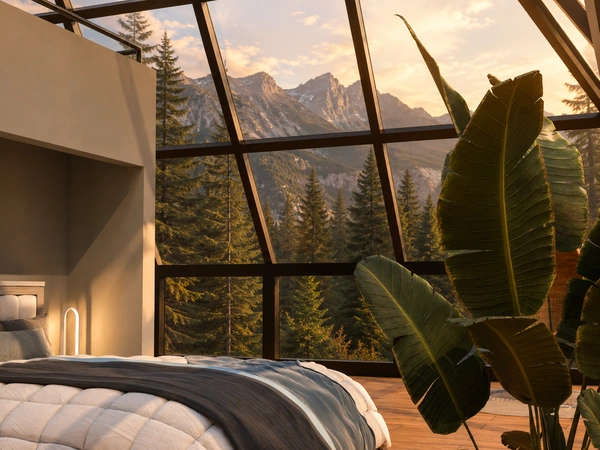
Glacier National Park provides habitat for nocturnal wildlife including bats and owls. Guests staying at our Glacier pyramids can watch dusk settle over the peaks before taking in the starry expanse through clear glass walls.
Frequently asked questions
Are there grizzly bears in Glacier National Park?
Yes, Glacier National Park provides habitat for approximately 300 grizzly bears across its valleys and mountain slopes. Grizzlies share the park with around 600 black bears.
How close can you get to wildlife in Glacier National Park?
Park regulations prohibit approaching within 100 yards of bears and wolves, and require visitors to maintain at least 25 yards from all other wildlife. If an animal changes its behavior because of your presence, you are too close.
Where can you see mountain goats in Glacier National Park?
Mountain goats are frequently observed along the high cliffs near Logan Pass and at Goat Lick Overlook along US Highway 2. They also inhabit rocky ledges throughout the high alpine trails of the park.
Do you need bear spray in Glacier National Park?
Yes. The park recommends carrying bear spray in an accessible place and knowing how to use it, and says it has been shown to be the most effective deterrent against bear attacks. It is intended to be sprayed into the face of an oncoming bear.
What is the best time of day to see wildlife in Glacier?
Dawn and dusk are recommended viewing times for species like beavers, bats, and coyotes in Glacier. Scanning open forest edges in early morning hours is recommended for spotting elk.
Plan Your Glacier Wildlife and Stargazing Getaway
Get early access to our pyramids near Bryce Canyon and Glacier, with priority booking to all locations.
Reserve Your Pyramid Stay near Glacier →